mostly berserk meta. i'm into berserk mainly for griffguts and i'm a huge fan of griffith.
Tag: theme: trauma
under a cut because a) this is largely about the hot button issue of griffith + sexual assault and b) it’s pretty off the cuff rather than carefully thought out so i want to reserve control over it lol
i’m gonna be honest, my biggest issue with the theme of griffith + beauty + sexual victimization is that it’s both very loud and clear, like it’s absolutely an intrinsic part of griffith’s narrative, but for some unknown reason it’s also more subtle than every other instance of sexual victimization we see? and i have no idea why miura was so coy about it but it makes it difficult and a little awkward to just take it as read
like even at the start w/ gennon. guts’ csa trauma is unambiguous – it’s violent, guts struggles and fights, etc. casca’s is also unambiguous attempted rape. she tries to run, and then is able to kill her attacker. but griffith’s is “voluntary” enough that like a majority of berserk fans don’t even see it as rape, despite gennon literally being a pedophile with a harem of child sex slaves, and griffith being a child, “who could still be called a boy in his innocence,” according to casca. the next morning griffith himself frames it as seducing gennon. also, unlike the other two instances, we don’t see what happened. All we have is Casca’s glimpse of Gennon’s hand on his shoulder and Griffith’s explanation the next morning.
And I actually have no issue at all with how it’s portrayed in canon, like anyone who isn’t a rape apologist and has an iota of reading comprehension should be able to figure out that it is rape and griffith was traumatized by it. I definitely don’t think Miura thinks Griffith freely consented or intended it to be read as ambiguous either. Griffith saying he seduced Gennon says way more about Griffith than about what actually happened. But compared to our other two protagonists and their formative traumas, it’s not nearly as in your face.
Then you have Griffith and the torturer, which is all left in creepy innuendo. Like it’s blatant enough that it seems willfully blind to assume there was no sexual assault going on, but again, it’s not like Miura shies away from depicting rape everywhere else in Berserk, so why is it only left in innuendo?
And yk what I think there’s a throughline from those – Gennon and the torturer as sexual predators obsessing over Griffith’s beauty – and both Griffith offering himself to Casca in the wagon and then Griffith’s vision of his future with Casca, t b q h. In that nightmare he’s attractive again, he’s virtually immobile, and again there’s the implication that Casca is having sex with him.
like I don’t think it’s a stretch at all to take all this together and say Griffith has some serious issues with sex even if Miura doesn’t come right out and say it like he does for everyone else.
like terrible, terrible depiction aside, this is probably the best set up for the eclipse rape we have. sex to griffith being a show of power or lack of power, and with griffith it’s always been the lack of it. with gennon, and charlotte, and casca in the wagon it’s been a trade – griffith giving them the only thing he has to offer in exchange for something they, with their greater power can give him. money, a kingdom, and… idk my reading of the wagon scene changes with the winds, but in this context i suppose it would be security, possibly griffith thinking if casca stays then guts will stay too after seeing them together.
and then this vision depicting a life like that. like the wagon scene and this nightmare seem to exist mainly to set up why the dark negative evil side of griffith would take this out on casca specifically, because griffith had just been projecting these issues onto her and when he gains power and loses his “goodness” he spitefully reverses their perceived roles.
BUT AGAIN this is both unnecessarily subtle and also a huge fucking mess thanks to how terribly written and depicted the eclipse rape was (and also the depction of the charlotte scene doesn’t help lbr) so I feel like i’m making shit up to make griffith more sympathetic lol. even though i’m like 90% sure it’s purposeful and also it doesn’t rly make griffith more sympathetic because i wholeheartedly sympathize with him even without all this lol, and femto is a literal demon made of evil so it doesn’t make him more sympathetic either. it just kind of ties a lot of themes together.
My thoughts very much line up with yours. I tend to think being raised in an environment that was probably physically dangerous as well as living through periods of involuntary starvation probably cultivated his detachment. Also I’m not sure he thought of himself as attractive? Like he might see his looks as a vulnerability since the folks that have given him attention for it have hurt him.
yeah ia with this.
i’m sure he knows he’s attractive and probably cultivates it since yk he’s trying to marry a princess, but i don’t think it’s something he’d like, be proud of or that would feed his ego or anything. i think he’d deliberately try to see it in a utilitarian way rather than having any feelings about his looks, positive or negative, bc the less rational feelings he does have would probably be negative – beauty is an asset to achieving his dream (not just in marrying charlotte but also looking the part of the hero of midland and gaining general acceptance), but it’s also something he associates with being preyed on by gennon, so he focuses on the first part.
huh, this isn’t rly something I’ve ever thought about, interesting question.
I’d say that in general he’d think about it in a utilitarian way – he knows what he’s capable of with it and he’d work to keep it that way. that includes fighting and being able to seduce a princess, or whoever else may be necessary. it’s a tool.
you could probably make a good argument for him having some issues with it/detachment from it though, that could feed into him thinking about his body as a tool rather than a part of him. like, looking at the way griffith said he seduced gennon eg, it seems like a way of removing himself from what actually took place – rather than thinking of it as gennon using him, griffith used a tool (his body) to get what he wanted, that kind of thing. a way of granting himself a sense of autonomy and detaching himself from the body which he’s washing in the river and thinking of as dirty now.
plus i feel like that attitude would make for some interesting character study-ish thought processes during his torture, with both the pain inarguably tying his body to him (also possibly related – his self harming habit?), and the torturer’s fetishization of his physical beauty, and afterwards when his body is no longer useful as a tool and he’s grown so used to the pain he feels numb and “like [his body is] floating in mid air.”
and ngl neogriffith’s feelings towards his body could also be interesting. femto was like, on the astral plane, his body was arguably not even real, but then neogriffith incarnates in flesh and blood again. he’s probably more concerned about his feelings lol, but he’d likely be like, super detached from his physical form, due to having lived on another plane of existence and being a pseudo god or w/e, and also literally untouchable. now it truly is nothing more than a tool, and one that can’t be broken or forcibly tied to him because no one can even inflict pain on him.
and therefore his thought processes could be extremely interesting if/when he is touched. though for me interesting is basically griffith lying badly to himself about not caring/not feeling/etc.
i think if the latter is the case then perhaps there will be a more light-hearted ending but… my preferences aside, from BS arc this manga’s theme is the quest for revenge, fighting against all odds etc. so i think that if this scenario occured then the manga will have kind of deviated..? not that it couldn’t be (objectively) a development, but still the ending would be all over the place instead of tackling the core elements, ie their relationship
yeah I totally agree. While I think you could argue that Guts forming strong relationships as a way of moving on from traumatic shit is in keeping with earlier themes, applying that to moving on from Griffith completely ignores the complexities of Guts and Griffith’s relationship, which is straight up what Berserk is about. Like yeah I’m super biased but I still think it would objectively be more narratively fulfilling to see their mutual obsession take centre stage again – it’s the difference between their intense relationship getting a proper climax and emotional catharsis versus being reduced to basically a bad break up that one dude couldn’t move on from.
It’s also a deviation in another way that I was considering tacking onto that post but didn’t, but now I want to talk about it.
But like imo if it is the case that Berserk is about Guts overcoming his obsession and moving on, then functionally Berserk is basically two different kinds of stories.
Everything from chapter one to chapter 129 is the story of a kind of fucked up dude with a lot of issues muddling his way through a very dark grey narrative and trying to do his best.
Everything from chapter 130 on is the story of a dude consistently Making The Right Choice.
Like, I kind of feel that those two stories are incompatible. In a narrative about a dude struggling with himself and trying and usually failing to make the right choices in a complex world where right and wrong barely even exist, which tbh is My Berserk, then it simply doesn’t work for the main character to then make the correct choice, ie focusing on Casca, and stick to it for two hundred and twenty chapters plus afterwards. If he eventually does make a genuinely good and correct and narratively rewarded choice, that should only happen at the end and it should be cathartic.
There are stories about protagonists doing the right thing the whole time even though it’s a struggle at times, and those can be fine stories, but it’s a giant downgrade from a story about a dude making a bunch of mistakes in a morally grey world, and an absolutely enormous tonal and thematic shift. It just doesn’t work as a complete story to me if that’s the case.
i haven’t looked at the new chapter, just the pics y’all posted & linked to, but with the feathers and casca wanting to see someone and “your wish may not be her wish” like i could see her using the behelit and joining neo-griff ….. but ………….. idk, has she remembered the eclipse yet? if not she’s bound to and that’s not gonna be pretty. also idk what the point of her joining griffith would be wrt guts …… like i hate the idea of his own desire
to see griffith getting mixed with his “feelings” for casca you know
what i mean?
anyway if i remember
correctly i think your “casca uses the behelit” theory involved her
having her own revenge journey or something like that but yeah what if
this instead. i’m thinking no thank you mr miura
haha i would straight up murder miura if casca joined neogriffith. my, like, unlikely ideal is the three of them with their own individual power ups (incarnated god, apostle mb along the lines of ganeshka wrt power, berserk armour) all kind of opposing each other to some degree. eg ngriff wants his empire and also wants guts in some capacity that he doesn’t understand so maybe tries to kill him, casca wants to kill ngriff but guts wants to be the one to kill ngriff but also he doesn’t want to kill ngriff, etc
I think the feathers are probably more a reminder of her past as a Hawk than necessarily to do with NGriff. That’s what I was thinking anyway, but like, with the addition that that past is traumatic and they’re a reminder of Griffith who is the source of her trauma and therefore it’s ~ominous~
ch 355, more random musing
i s2g it’s like this chapter was especially designed to fuck me personally up and leave me fretting for however long until the next one comes out, it has no chill it’s either my personal worst or best case scenario and i have no way of knowing which. mb this is premature since we don’t even have a full translation yet, but still. i’m stressed lol
and seeing all the skullknight fans pretty much just assuming that there’s going to be an emotional chapter followed by guts and casca hugging it out has me torn between thinking that’s a good sign bc it means miura isn’t using the ominousness as a fake-out, since it seems your typical berserk fan doesn’t think anything too bad is going to happen – the ominiousness is just plain ominiousness and if things go truly wrong it will still take people by surprise and be dramatically effective. but also what if it’s a bad sign because they’re just better at predicting berserk than me and more on miura’s current wavelength? 😦
also i’m eyeing that last image of the tree and how it looks similar to the falconia branches and various hearts of darkness
i’ve got my eye on you skellig
also eyeing the feathers in casca’s dress design tbqh
also guts looking scary and intimidating in that spread of him in the berserk armour w/ the eclipse scene behind him is good, and the more i look at the last few pages, eclipse flashback + guts -> tortured griffith -> ominous looking tree the more i’m like, hmmmmmm
as soon as we get a translation i’m re-reading the entirety of the skellig stuff so far to see if i feel like it all fits together in some way
355 spoilers
fair warning this is v rambly and stream of consciousness, and largely negative tho not entirely
all this time and i’m still in hope for the best, prepare for the worst mode, agh this is so frustrating
(lol @ reusing a bunch of images from casca’s life we’ve already seen
in our journey thru her mind. also my god i hate the art so much rn
lol. casca’s face deserves better.)
and idk how to feel about
downplaying the fetus/moonlight boy now lol, with way more memories
alotted to guts, since apparently “there’s someone i want to meet” is
repeated towards the end here, and the one saving grace of that fetus
was the hope that casca wanted to meet it, instead of guts (or griffith
for that matter).
also danann calling guts to show up psychically which then proceeds to trigger casca seems weird and fishy to me? but idk maybe it reads as less weird in context, plus i don’t trust elfhelm so.
and i’m extremely wary about guts triggering her because he reminds her of the eclipse, rather than because he assaulted her himself. those dreamy half-remembered memories sure are convenient
on the other hand they’re also convenient for this delayed reaction happening just in time for guts’ arrival. meaning there’s a reason guts had to show up first before casca remembered the eclipse.
this chapter seems to be playing up g*tsca for the sake of sweeping the rug out from under the readers at the end when casca sees him and shit starts going down, but is that leading to actual Shit Going Down or is that leading to, idk, farnese jumping in and calming her down before nobly stepping aside so they can have a tearful reunion, or guts like, saving the day by Being There For Her For Once??
i s2g miura knows exactly what the best case and worse case scenarios are (tho he probably thinks they’re reversed) and he’s taunting me personally. like i’m sorry but ivalera joking that schierke woke up the “final boss”? just plain and simple teasing about schierke’s crush on guts or also ominous foreshadowing? casca’s last clear memory is rescuing griffith, which explains why tortured griffith is one of the final images, but why make that her last clear memory, why give that a full page at the end of the chapter right before the picture of the tree that looks visually similar to the darkness in her heart unless perhaps… a parallel?
But even if that’s the case is Casca going to use the behelit in Guts’ pouch or is Guts going to get another chance to Not Fuck It Up This Time?
I’m feeling like the odds are getting higher that after a moment of emotional peril Guts comforts her, promises to stay with her, and they live happily ever after until NeoGriffith arrives to fuck shit up versus shit actually going down and Casca graduating into a secondary antagonist role. And the odds of anything in between happening, like eg Casca rejecting Guts romantically and healing while becoming close friends with Farnese, are feeling extremely slim after this. Like, imo we’re in for either g*tsca or the “tragic” opposite of g*tsca after how it’s been played up here, not “let’s just be friends.”
Also there’s a strong chance I’m just in the denial stage rn. But like I’ve been salivating over the idea of all three Golden Age protags being enemies with their own clashing goals by the end of the series for a while now and as long as that’s still a possibility I’m going to continue to keep hope alive.
yk i think guts is supposed to seem chill and confident and generally changed in a positive way after his year long vacation but since every moment that emphasizes his cool chill attitude makes me want to punch him i’m not 100% certain lol
like i generally take as read that guts leaving the hawks is one of those things that’s overall bad but had some positive effects, like guts being more confident and cool, since yk the moments that indicate that are things the target audience of dudes would generally agree is cool, like calmly grabbing casca’s tit while she’s yelling at him and then saying, ‘come with me’ in a nonchalant non-commital way, or like telling casca she’s too naked and distracting during the wyald fight, or constantly being a smartass dick during the competition, that kinda thing.
but then again since i generally argue that leaving the hawks was a bad decision, maybe those moments are actually meant to be off-putting. like i don’t really think so, if i was a betting person i’d place money on miura thinking they make guts cooler, but i kind of want to believe.
I dont agree with this tbh. Guts leaving the hawks was a good thing. One of the most difficult and traumatic experiences is gaining independence and discovering your own way i life. The hawks were a home for guts but learning to leave to find his own way was special for me. I used to think that him leaving was sort of “cool” and used to set the whole tough lone wolf trope, but because of how guts felt inferior to his peers, and especially griffith, leaving the hawks was the most endearing action he couldve done. Its not played for a trope or for a demographic but rather to show the journey of a man who wants to be someone he can love. Ik ur a hige guts x griffith fan and i see the obvious undertones and interactions but when i see how guts feels when he seew his own journey next to griffiths i cant blame him for leaving.
I respect your opinion and I don’t mean to reblog this just to be like ‘nah you’re wrong’ because like, I do think Miura was trying to convey both good and bad effects of Guts leaving. Like I said, though I personally think that Guts’ more confident and independent attitude is shown in insufferable ways, I feel like Miura intended it to be a positive change for him.
And in general the idea of someone leaving a place to be more independent is a perfectly valuable and potentially a very positive narrative depending on the circumstances, and I don’t want to suggest that if you found Guts’ decision to leave the Hawks to be valuable then you’re wrong, there are plenty of reasons to appreciate it.
But, because this is one of those readings that tends to inform a lot of my other posts and meta etc, I just want to kind of explain where I’m coming from and what I mean by “mistake.”
It’s not a mistake you can blame Guts for at all, because his reasons for leaving are perfectly understandable and sympathetic, but it’s a decision Guts made based on misinformation (from Griffith’s stupid speech) and his own issues – largely desperately wanting to be loved and respected and believing all too easily that he isn’t thanks to his fucked up childhood.
And like this is also something Griffith shoulders blame for, for being an emotionally obtuse idiot who doesn’t recognize his own feelings until he’s spent a year in a dungeon. But again, like Guts’ issues, I find this sympathetic and understandable too.
(And like, while yeah I obviously ship them lol, this isn’t necessarily shippy, it’s kind of just a fact of Berserk that it, and the Golden Age especially, revolves around Guts and Griffith’s relationship, platonic or otherwise. Guts chose to leave because he wanted to be Griffith’s friend – before overhearing the speech he didn’t feel inadequate at all.)
Basically it’s not a mistake in the sense that Guts should’ve known better or that Guts choosing to leave was stupid and reflects badly on him, it’s a mistake because if Guts and Griffith were less terrible at communication Guts wouldn’t’ve wanted to leave in the first place, and once he realizes that he left because of misinformation he feels a lot of regret.
I think I’m going to write a full post on this soon because it would be nice to have something to link back to when I casually throw the idea that Guts leaving was a mistake out there, because I know it’s actually pretty controversial in fandom as a whole. So if you’re interested in my further thoughts with more like, textual evidence lol, I’ll get on that, and if not then no worries and I’m more than happy to agree to disagree 🙂
oh damn this is a really good connection and i am actually really pissed off at myself for not noticing it. not even just the chapter 72 bit – like I swear to god I have a total blind spot when it comes to this fucking scene because first while I was writing that Griffith meta like 75% of the point was “Griffith’s dream is a coping mechanism” and it wasn’t until I was almost finished writing all four parts that I realized “what do you fear in this place” and then vision Griff pointing to the castle was basically Berserk stating that fact directly.
AND NOW you’ve pointed out that vision Griff throws down a sword and I’m like !!! what the fuck I’ve been thinking about swords as coping mechanisms in Berserk for ages now how did I miss this too???? even after connecting this very page to Griffith retreating into his dream as a coping mechanism???
like look at this
So thank you for sending this ask lol.
Wrt defying vs succumbing to fate, I think you have an interesting point there. While Casca isn’t technically defying her fate, knowing how fate works in Berserk, she is defying the “natural way of things,” ie strong prey upon the weak, as is Griffith. It turns out that Griffith’s fate all along is to overturn the natural way of things. But with the way later Berserk kind of sets up Guts defying fate vs Griffith succumbing to it, it’s ironic that in order to fulfill his (and Casca’s) dream and change the world Griffith essentially accepts fate’s mastery over his life and in doing so becomes the strong who preys upon the weak first, essentially taking the nobleman’s place here.
I don’t rly know where to go with that rn, but it’s something to think about.
For my part, I want to take this parallel as another indication of how swords and dreams are emotional defense mechanisms in Berserk (as you may have guessed from how I opened this response lol).
When Griffith throws the sword to Casca the straightforward reading is that he’s telling her to defend herself.
Which he is. But there’s another level where she’s protecting not just her body but her heart. With the sword she does defy what seems to be her fate, and switches from meekly accepting that this is just how the world works to fighting back.
And that’s what Griffith represents to her, which is the big reason I think she’s so uttery devoted. He represents that defiance, and that potential to change the world. And her dream to be Griffith’s “sword” after taking up the sword he threw her is basically her way of coping with the general shittiness of the world and how it’s fucked her over throughout her childhood by fighting back.
idk at some point I’m going to have to sit down and hammer all this out.
i honestly can’t believe that we’re not supposed to see griffith as both in love with guts and unable to easily come to terms with it because his frame of reference for same-sex attraction was gennon
and vice versa for guts and his formative trauma w/ donovan
it’s just all there, laid out so neatly. like i feel like it’s not a stretch to call it the essential point/theme/plot of the golden age. two dudes love each other and completely fuck it up because they’re traumatized. like yah i’ve written an essay about this b4 but man sometimes it just hits you. like right now.
i want to like, write a longish meta about how guts’ “dream” ie his attachment to fighting/his sword is a coping mechanism to deal with his traumatic childhood and then every traumatic event since then but like
is that really something that requires an argument behind it
In the fourth and final part of this exploration of the tug of war between Griffith’s dream and his love for Guts, I’m going to look at how Griffith ultimately ends up choosing the dream over Guts despite the fact that Guts is more important to him – or, more accurately, because Guts is more important.
I’m starting by diving right into what is, hands down, my favourite part of Berserk.
The small battles we fought on the cobblestone when we were still young. The small victories we achieved. The many sparkling junk spoils we plundered.
In the evening… staring up from the back alley of brothels and taverns, where the sun never shines, I saw something. Shimmering against the setting sun, it was the brightest thing I had ever seen.
I made up my mind. The junk I would get for myself… would be that thing.
Darkness.
Deep darkness without even a trace of light.
How much time has passed since I was cast into this darkness…?
An eternity… but it also seems like an instant… All my senses are numbed and I can’t feel a thing. What of my body? It’s like it’s floating in mid-air. Have I retained my sanity? Did I go insane long ago?
Only him.
Like lightning on a dark night, he rises up within me, blazing. And again and again like a tidal wave, an infinite number of feelings surge upon me. Malice, friendship, jealousy, futility, regret, tenderness, sorrow, pain, hunger… So many recurring, yearning feelings. That giant swirl of violent emotions in which none are definite but all are implied. That alone is the bond which keeps my consciousness from vanishing amidst the numbness.
I know that I’m different from other people. Those I’ve met can by no means disregard me. They always view me with either a look of good will or animosity. I know that the good will forms into trust or fellowship and the animosity into awe or possibly dread. Thereby have I grasped… the hearts of so many in these hands.
…But why is it when it comes to him I always lose my composure?
He was the reason I’ve been thrown into this darkness, and now he’s the sole sustenance keeping me alive. Out of so many thousands of comrades and tens of thousands of enemies, why just him…?
How long ago did someone I was supposed to have in hand… instead gain such a strong hold on me?
Because you’re in love with him, oh my god.
At the end of the day, that’s what it boils down to. That’s the difference between Griffith shutting Casca out and letting Guts in. That’s why Casca has been jealous of Guts. Casca wanted to be Griffith’s emotional support, something indispensible to his dream – she wanted to be the one to “change him that way” – and learning that her feelings for Griffith were romantic all along points pretty conclusively imo to envying Guts for being the person Griffith loves, rather than her.
I’m going to be honest here: as much as I’ve been taking it as read that Griffith is in love with Guts (and, tbqh, vice versa) I wasn’t actually planning to make it a central point of this meta. I genuinely thought, going in, that I could focus on Guts as an emotional crutch and shield against his self loathing, as I’ve been doing so far. Yk, Griffith allows himself to become dependant on him because he loves him, but the point is the emotional dependency, not the love, right?
Fuckin wrong.
The climax of Griffith’s narrative can’t be understood without not just acknowledging that Griffith is in love with Guts, but recognizing it as the whole point and his central motivation.
This is going to be important later, but for now I’m stating that up front and I figure this is a good place to do so because, between Casca’s confession to Guts and Griffith’s monologue, it’s basically Miura spelling out the fact that this love is Griffith’s strongest motivating factor.
(And, just as an aside, despite the fact that it’s never explicitly defined, I’m calling it romantic love because a) it is, b) like, it just fucking is lol. I feel like you have to jump through hoops and twist yourself in knots to call it platonic. Without assuming that straightness is the default, saying Griffith is in love with Guts is genuinely the most straightforward, clear and concise way of reading this relationship to me. All my points hold true if you call it platonic love so ultimately you do you, but if I called it that I’d be being disingenuous.)
This monologue is our re-introduction to Griffith after a year of nothing but torture, darkness, and self-reflection. It’s the definitive statement on his relationship to Guts and how it compares to the dream now, after he’s lost both.
And the dream barely rates a mention. The matching visual of the shining/vivid thing, and the way Griffith opens the monologue by describing the dream as the brightest thing he’d ever seen, prime the reader to expect that the one vivid thing is the dream. That after losing Guts, Griffith has returned to obsessing over the dream in deluded desperation, or is maybe lamenting its demise.
But it’s a pure bait and switch because Guts is all-important to him now. Despite Guts’ rejection, despite the loss, despite the fact that he’s partially blaming Guts for having been tortured for a year, next to him the dream grows dull.
A core point of this meta was basically to show how this has been true from the very start. It’s not that Guts only outshines the dream when the dream has been lost to him, it’s that, after losing both the dream and Guts and being forced to confront himself, stripped of all those defenses that help keep him in denial, Griffith is finally able to understand, too late, what has been most important to him all along.
And this remains true. From Guts rescuing him to Griffith choosing to sacrifice him for the dream, Guts is still more important.
But if Griffith’s story up until Guts leaves has been about how his relationship with Guts had begun to replace his dream as the thing he turns to in order to shield himself from his weaknesses – guilt, self-loathing, the weight of lives on his shoulders, etc – then his story when Guts returns follows the opposite trajectory:
it’s about how he returns to his dream as his armour against his feelings for Guts.
And the place we’re starting from is Griffith letting go of his dream.
Back near the beginning Zodd gave Guts a prophecy:
If you can be said to be a true friend of this man… then take heed… When his ambition collapses… death will pay you a visit! A death you can never escape!
Because Zodd is a dramatic asshole. But the thing is, Griffith’s ambition has collapsed. His dream’s dead. The closest he can get to it before literal magic intercedes in his life is in moments of self-delusion, like when he told Charlotte he’d return to her, and when he snapped and chased a hallucination. But in the cold light of day, aware and relatively sane, he knows his dream is gone. Charlotte could still be over the moon for him and it’s not going to help him gain her kingdom without a tongue or working limbs, and he does know it.
And when Griffith watches the castle disappear over the horizon and lets the flowers in his hands go as his symbolic child self runs away from the brightest thing he’d ever seen rather than towards, when Griffith lets go of his dream, he’s… okay.
The Godhand don’t make an appearance. The behelit doesn’t come back and start screaming. Griffith is continuing on. This is acceptance. We’ve already seen the monologue about how the dream barely matters to him in comparison to Guts after all, so this isn’t too surprising either.
And then fucking Wyald shows up.
This fight’s significance to Griffith’s narrative is in his distance from the others, his alienation in being the only one who can’t pick up a sword to fight, and his helplessness as he desperately tries to do something to help Casca and Guts and can’t even manage to tear himself away from his minders, particularly in contrast to the fight against Zodd.
Eg:
Guts compares this fight to the Zodd fight a lot. When he’s briefly knocked out we see a flashback to a discussion with Erica where he talks about Zodd and Erica suspects he wants to fight him again. We see Guts thinking about Zodd as his only other frame of reference for a real live monster. And we see him think about Zodd when it comes to his and Griffith’s partnership specifically.
This emphasizes the difference between that fight and this current fight. Namely:
Whereas when Griffith tried to rescue Guts from Zodd they then squared off and faced him together, when Guts saves Casca he tells her to get lost and insists on taking Wyald one on one, because he’s got a score to settle.
Compared to the fight with Zodd, which led to the most positive and hopeful moment of their relationship – Griffith admitting he had no rational reason to leap into danger and save Guts, and Guts realizing he may have found what he’s been looking for ever since he killed Gambino – this fight with Wyald is a showcase of Griffith’s enforced distance and isolation from everyone, especially Guts.
If Griffith saving Guts from Zodd was the pinnacle of their relationship, the truest and most revealing moment of how Griffith feels, leading to Guts’ subsequent acceptance of those feelings and dedication to him in turn, then Guts pointedly fighting Wyald alone highlights the low point they’ve entered where they’re forcibly separated by Griffith’s broken body and voicelessness. They’ll never be a team again.
The chapter right after the fight is a heartbreaking mix of hope and despair. It begins, very appropriately, with Charlotte telling Anna that Griffith said he’d come back to her. Logically, like I’ve said, Griffith was deluding himself at that point. He accepts that his dream is gone a few hours later when they make it out of the sewer tunnels.
But by bringing it up and explaining that moment here, at the beginning of this chapter, it serves handily as ominous foreshadowing, and, even better, it’s a reminder that Griffith has always clung to his dream as emotional self-defense, and it still “smoulders from the bottom of [his] heart.”
The thing is, the comparison between Wyald and Zodd isn’t solely for the sake of contrast. It’s also a reminder of that pinnacle of their relationship, of
Griffith risking his life and dream for Guts, of Guts feeling like he’d found that indefinable thing he’d been searching for ever since he killed Gambino. It’s a sign of hope that the potential for their relationship isn’t lost. They’ve lost their ability to fight side by side, but their relationship isn’t predicated on just being able to fight together, or Griffith’s leadership, or the structure of the Hawks. It’s based on genuine love and mutual respect, and that isn’t gone.
Despite everything, they can still smile at each other. This scene demonstrates the potential they have just as two people who love each other, and gives readers vain hope for their future as it simultaneously sows the seeds for the destruction of their relationship.
The mask/helmet is a symbol of his former role as the leader of the Hawks, and hence, a symbol of everything that entails: the dream, repression, isolation, the image of perfection, everything I’ve been talking about for way too high a wordcount now. All those defense mechanisms.
Guts saying it’s okay for Griffith to take off the mask since it’s just the two of them is, therefore, an extremely loaded statement. Guts is offering Griffith the opportunity to be vulnerable, to be himself, no image, no mask, no leadership position, just the two of them, as equals, in each other’s company. He’s offering acceptance of Griffith, weakness and vulnerability and physical damage and all.
Instead of accepting, Griffith asks for his armour. It’s a way of reinforcing the barrier between them, and hiding his vulnerability.
The great thing about this chapter is that I don’t have to work to justify any of this because it’s literally called, “Armor to the Heart,” lol. Telling Charlotte he’d return was denial for the sake of guarding his heart against the reality of having lost everything he’d once strived for, and asking for his armour is a more literal version of that. Once Guts puts it on him he starts awkwardly denying reality too – such as telling Griffith he’ll be able to swing a sword soon.
Rather than Griffith being able to accept the truth of what’s happened – that he’s vulnerable, he’s helpless, he can no longer win for the sake of the dead, everything he’s worked for is lost – and maybe find consolation in Guts’ acceptance of him and love for him despite that, he tries to keep hiding behind the old image of perfection, the way he used to. This is basically a futile version of Griffith smiling and telling Casca, “it’s nothing.”
When Wyald returns like a bad penny, he really gets to the heart of what it means for Griffith to manufacture this image of himself to hide his vulnerability behind, and boy is it devastating:
Griffith is a symbol. He has deliberately cultivated that ideal image of himself as the perfect leader, a knight in shining armour. It keeps him distanced and detached from everyone except Guts, who has been allowed to see through it. His allies see him as a symbol of hope and change for the better, his enemies see him as a symbol of corruption in the system and change for the worse, Gennon sees him as a symbol of perfect beauty, Charlotte sees him as a symbol of a perfect relationship, and his Hawks see him as a symbol of their rise to glory.
And, of course, it all leads back to Griffith’s dream. It’s the reason it’s necessary to become this idealized image, rather than a real person. It’s an intrinsic part of his ascent to the throne.
And it’s part of how he convinces himself that he’s all right, “it’s nothing.” It helps him deny his emotions and bury them. If he can convince everyone else he’s perfect, he can convince himself. That mask of perfection is an intrinsic part of his defense against his self-loathing.
This is what he tried to hide behind when he asked Guts to dress him in his armour, and this is what Wyald strips away from him now.
He’s lost nearly every defense he has against his own self-hatred. His dream is dead in the water and he failed to prove that everything he’s done and all the lives lost in his wake were worthwhile sacrifices. He’s not one of the mover shakers of the world, he’s just an ordinary person who wanted to be special and couldn’t stand the weight of guilt on his shoulders.
Now he’s helpless and dependent; not only did he wholly fail the people who follow him, he is now reliant on them, without anything even to offer in exchange. Wyald pretty much takes away his last lingering ability to deny this.
To Griffith, this is as close to hell as you get without dying first. He didn’t keep winning for the sake of the dead, he lost, for good. He failed everyone, dead and alive, and his very existence is worse than worthless, it’s a burden on others (from his point of view).
I’d say that this couldn’t be a more perfectly tailored hell for Griffith if someone designed it that way, but, well, someone did design it that way.
Then the next scene just doubles down.
Honestly there are a shitload of possible readings of this scene, many of them not even mutually exclusive, and I think there are a number of complex factors that feed into it, but I’m landing on one for the purposes of this meta.
Based on what I perceive of Griffith’s own feelings of self-worth and his current headspace, and particularly the way the scene with Wyald right before serves as a literal and metaphorical stripping away of everything that gives Griffith a sense of worth, I think one solid reading is that he’s offering himself to Casca here because it’s the only thing left of himself that potentially has worth to someone.
Like I’ve seen other Berserk fans call this an attempted rape as a matter of course, which couldn’t be further from the truth, and not only because he literally stops when Casca says stop, and is physically incapable of even taking his clothes off. It’s not a sneak preview of the Eclipse rape, it’s a huge, pointed contrast.
This is Griffith at his lowest. He’s broken, desperate, and he feels worthless. He’s not trying to fuck Casca because he wants to, it’s because at one point that’s what she wanted.
He moves on her right after overhearing her tell Guts that she just wants to be held, after she contemplates her shaking hands and remembers how Griffith had once been able to comfort her with just a hand on her shoulder. Contextually the set-up of this scene points to Griffith desperately wanting to be that person who could comfort Casca once again, instead of being the person who needs comfort.
I also think there’s a precedent that sets this scene up with Casca comforting Guts sexually and thinking, “not just being given to… maybe I can give something as well.” The difference between giving and being given to is a recurrent theme, and I think this scene draws on it.
But he is the one who needs to be comforted. He no longer has the power or the position to be the one offering comfort. Casca refuses his sexual offer, and as he trembles above her, she lays her hand on him, in a role-reversal that just highlights everything of his past self that he’s lost.
If Griffith’s ability to once put on the mask of perfection and comfort Casca even in the midst of his own despair was a demonstration of strength, this is a humiliating demonstration of complete and utter weakness and uselessness. It seems that now he’s nothing to Casca, once his most devoted follower and admirer, except a victim who needs to be taken care of.
Guts’ hand on his shoulder in Tombstone was a sign of his emotional vulnerability to Guts specifically, because of the unique nature of their relationship. It was a symbol of Guts’ hold on him and Griffith’s weakness in loving him. Casca’s hand on Griffith’s back now is a sign of Griffith’s vulnerability in general. His armour’s been stripped off, his dream is gone, everything he once relied on to help him repress his self loathing has been ripped away, and now he can’t offer Casca anything; he can only accept her comforting hand.
Griffith has one thing left: Guts, and the possibility of absolution to be found in his love, if Guts does still love him. If Griffith needed to hear that he wasn’t cruel back in Tombstone of Flame, now he desperately, desperately needs to hear that he’s worth something to someone. That he isn’t just a cruel monster who piled up a mountain of corpses and then couldn’t even climb it all the way, who is now just a useless inconvenience to everyone with the weight of thousands of bodies on his shoulders.
And I believe, despite everything, that Guts would’ve been enough. Narratively, we’re told that he could’ve been enough. Griffith’s torture chamber monologue, Griffith letting his dream go, the way “I’ll st-” is placed on a panel of Griffith sleeping through it, conveying a sense of missed opportunity perfectly:
And the way Guts realized he fucked up by leaving only seconds after Griffith has overheard them.
Note that this line is a conclusive call-back to Guts musing on this statement a few pages earlier, making it clear that it refers to his regret over leaving, and how by leaving he threw away the thing he wished for in the first place:
If there wasn’t at least the possibility for Griffith to find some kind of happiness in a life with Guts at his side despite losing everything else, none of this would matter. Guts finally making the right choice by deciding to stay just as Griffith thinks he’s going to leave again would be dramatically pointless.
And this is a tragedy, so despite all these hope spots, this happens:
And Griffith just fucking breaks.
What do you fear in this place? asks the version of Griffith who still has a dream, and then he points to another place, a place where Griffith could leave his fears behind.
Like this is literally right after he overhears Casca telling Guts to leave. This was the part I struggled with until I just went with my gut, backed up, and realized that this isn’t actually about Griffith’s self-loathing, or his fears of being worthless or a burden. It’s not about being stripped of his coping mechanisms.
This is about being in love with Guts. This is about the visceral fear of Guts leaving him again, not because of how it might reflect on Griffith as a person with or without worth, but because he loves Guts so much he can’t bear the thought of a life without him.
Griffith’s dream is a coping mechanism. This page conveys that concept as clearly as anything. “What do you fear in this place?” Run away from it, towards your dream, your kingdom, the safe place you’ve fantasized about all your life, the place where you have the power to make things better.
He desperately chases his hallucinatory vision of his dream, and then he has a vision of a potential future:
And, true to form, the defining aspect of this short, three-page sequence isn’t the loss of Griffith’s dream or his helplessness and dependency. It’s not about his self-loathing or being unable to hide his weakness behind armour and a mask of perfection. It’s Guts’ absence. The point is that Griffith is here, with Casca, and Guts is elsewhere.
“With you and the boy… just the three of us.” Like their kid is even named after Guts, just to highlight the actual Guts’ absence as emphatically, and depressingly, as possible. The first image is Griffith surrounded by Miura’s patented black panel of symbolic isolation, Casca brings up Guts and wonders where he is, then reiterates that it’s “just” the three of them. In a total of three pages containing almost no other information what we’re given is Griffith with Casca and a nightmare kid named after the man he loves, Guts gone, and Griffith’s total mental and emotional detachment from the world.
And then he wakes up and immediately tries to kill himself.
What does Griffith fear in this place?
The first time Guts left him he ran to Charlotte, the means of achieving his dream, for comfort, denial, escape from reality, and self-destruction.
This time he tries to turn to his dream again, but it’s nothing more than a hallucination that segues into a nightmare in which Guts has left him behind, and with no dream to escape to, no armour or mask bury his heart under, no coping mechanisms left, he loses himself. “This peace and quiet isn’t so bad,” he thinks, barely even aware, his life stretching out ahead of him, without Guts.
That is, after all, the one difference between now and the torture chamber. He’d lost his dream, his tongue, the use of his limbs, his self-worth, ability to hide behind an image, and Guts then, too, and the Godhand never showed. But Griffith thought he would eventually die in the torture chamber – even if the King specified that he live through a year, that’s a lot less than a lifetime. Now he’s faced with a full life in this state, apart from Guts.
And I want to make this distinction clear. The prospect of losing Guts is what sends him into suicidal despair. It’s not the loss of his dream or the stripping away of the persona he hid under – in other words, it’s not the loss of the coping mechanisms he used to rely on that drives him to despair. Losing those is likely what makes suicide, and then sacrifice, seem like the only possible escape from his despair, hence the set-up with Wyald and Casca hammering home the fact that he’s lost all his ways of guarding his heart, but it’s not the source of that despair. The source is Guts.
Guts was replacing the dream as Griffith’s defense against self loathing. But that does not make Guts just one more coping mechanism to lose. He’s not the final straw that broke the camel’s back, he’s the whole bundle of hay.
The premise of the first three parts of this meta was that his relationship with Guts helps Griffith deal with the immense weight of everything he’s done on the path to his dream, and had the potential to fully replace achieving the dream as Griffith’s way of not hating himself.
Well the premise of this part is that the reason Guts could’ve replaced the dream is because Griffith is in love with Guts, incredibly, all-consumingly in love with him, and now that is what he needs help coping with. There’s no getting around this lol, and no way of downplaying it either.
We know this because of how his nightmarish vision of a life with Casca highlights Guts’ absence instead of, eg, his self loathing, or his lack of an image to hide behind, or his guilt, or being a burden to Casca (hell, in his imagination she’s explicitly content.) We know it because it’s the words, “even if it’s alone, you have to go,” that make Griffith snap. We know it because the entire narrative of the Golden Age has largely been devoted to establishing that Griffith feels unprecedented, incredibly powerful feelings for Guts, and this is the payoff.
We know it because Berserk thoroughly foreshadowed the Eclipse during the Black Swordsman arc, and it was absolutely not subtle about about love as a motivation:
I’ve written a post fully explaining this already so I’m not going to be that thorough here, but suffice to say, through images like Femto there on “so that you could bury your fragile human heart,” through Puck’s direct questions and statements, through the entire point of this scene being to hint at Guts’ backstory, etc, it’s made very clear that the Count and Griffith/Femto are parallels.
And we know it because of what drives Griffith past that final point of despair that opens the behelit.
Sorry for posting practically the whole scene, but damn, don’t you just want to bask in it?
After everything – the loss of his dream, the torture, the loss of his voice and working limbs, the loss of his image, of his escape, of his denial, of his pride, and the loss of Guts – what finally plunges him into the kind of despair that creates a demonic demigod is the touch of Guts’ hand. Specifically his hand on Griffith’s shoulder.
What does Griffith fear in this place? What drives Griffith into despair?
Love.
It’s the understanding how utterly fucking gone he is for Guts. That hand on his shoulder signifies Griffith’s vulnerability to Guts because of his feelings, and it’s that touch that finally opens the behelit.
To split hairs, what drives him to despair is not believing that Guts will leave him, it’s knowing that if Guts leaves him, the loss will destroy him.
After all, it already happened once.
He was the reason I’ve been thrown into this darkness, and now he’s the sole sustenance keeping me alive.
And Griffith’s vision of the future shows us a version of what he believes will happen: if the first time Guts left his body was destroyed, the second time the rest of him will follow. We saw him existing in a seemingly permanent state of semi-dissociation, maybe living entirely in daydreams (”daydreaming again…”), barely aware of the present.
Love is the source of Griffith’s despair – the overwhelming, horrifying, life-destroying vulnerability of love.
So Griffith turns back to his first defense mechanism to escape it.
Now, I don’t want to downplay the role Griffith’s guilt plays in the sacrifice. I didn’t write three posts about Griffith’s issues only to completely ignore them at the climax of his arc just because love happens to take centre stage.
So let’s briefly recap.
Griffith is filled with guilt and self-loathing; his dream was a way of repressing those feelings with the belief that one day his very existence, and everything he’s done during that existence, would be justified. One day Guts came along and instead of continuing to live in repression and emotional denial he fell in love and started opening up. This made him vulnerable and “weak,” so when Guts seemingly rejected him because of everything Griffith hates about himself, his dream was no longer enough for him to retreat to. So he crashed and burned. Now he’s stripped of all his defenses and the horror of that vulnerability to love has sent him into pure despair.
And now some cenobite looking assholes have joined the party and they’re telling Griffith ex-fucking-zactly what he’s spent most of his life desperately hoping to one day hear, in some form or another:
And despite being plunged into crimson-behelit-opening despair by his love for Guts, despite already being told everything he wants and needs to know – that he’s been chosen by God, all is not lost, he has another chance, and to take it what he has to do is sacrifice the Band – he still irrationally, desperately prioritizes Guts when his life is in danger yet again:
This is such a tragic moment, because this is the last time Griffith chooses Guts over the dream. And, once again because he loves Griffith, Guts is the one who lets go of his hand, falling away from Griffith into darkness like a lost beacon.
So, separated from Guts, the Godhand bring Griffith up to the palm of the hand and then they proceed to play him like a fiddle, knowing exactly which buttons to push, in their exploration of his self-loathing and guilt.
Like, they’re not lying to Griffith, technically. What Ubik and Conrad are doing is playing to Griffith’s shame and guilt. They are showing Griffith his own image of himself:
Griffith sees himself as a stupid kid scaling a mountain of corpses to get to a castle. He’s consumed by guilt, which is why he can’t stop – because if he does, if he apologizes, if he repents, everything will come to an end, and that mountain of people will have died for nothing.
We already know this, of course.
The Godhand show Griffith his own perception of himself, and tell him that it’s completely accurate.
So of course, of course we have to revist the moment Griffith asked someone if they see him the same way he does, in the hopes of getting a different answer:
With Guts, Griffith could’ve taken a different route. He could’ve learned not to see himself as a monster. In showing Guts the worst of himself and being accepted, he could’ve accepted his own self-worth, independent of achieving a dream.
I mean, let’s be real here: Griffith has no real reason to feel as guilty as he does, or as driven for the sake of the dead as he does. He’s right when he says that the Hawks chose to follow him. The only people whose deaths he forced were enemies trying to kill him, give or take a pedophile who wanted to capture him as a sex slave rather than kill him, and a kid whose death was an accident and not on his orders, even if it did work out great for him. He’s a military leader, but so is Guts, so is Casca, hell so is Rickert technically, and none of them feel any guilt about the people they kill in battle, or the men they send to their deaths.
It’s heavily suggested that Griffith wants a kingdom in order to create a place of equality, where people’s lives and bodies aren’t bought and sold. (”What a waste. On the battlefield, the life of a common soldier isn’t worth even a single piece of silver.”) When he eventually does get a kingdom that’s exactly what it is, and it exists to grant the deep desire of humanity as a collective – in other words, the people who fought and died for it considered it worth fighting and risking their lives for. It’s not just Griffith who wants this kingdom, according to the narrative, it’s humanity – certainly the non-elite majority of humanity.
Griffith thinking of himself as a monster, and the Godhand calling him one, is Griffith’s own personal self-loathing bullshit talking, not an objective moral judgement, or Miura’s moral judgement.
Like, Miura deliberately shows us that the Godhand are fucking with him, telling us that chapter 77′s magical mystery tour through “the reality within his conscious realm” is highly manipulative and far from objective:
If Guts – any close, intimate, revealing, and genuine relationship really, but Griffith’s with Guts is the one this is about – was Griffith’s potential to see himself differently, to judge himself less harshly through the eyes of another, then the Godhand is a reinforcement of Griffith’s self-loathing.
Guts could’ve told Griffith he wasn’t cruel, wasn’t a monster, that he genuinely loved and admired him even while knowing all those things Griffith is ashamed of, and left so he could be more like him and become a friend to him. But he didn’t, and now the Godhand are using his words to tell Griffith that he is cruel, he is a monster – and that it’s necessary to be.
(And, just to be clear, this isn’t a judgement of Guts. He has his own giant pile of issues contributing to this world-destroying misunderstanding, and I feel like I fully understand his reasons for every mistake he made, and I love him for them lol, just like I love Griffith for his contribution of issues to this enormous fuck up. But this is about Griffith’s side of things, not Guts’.)
So, if Guts could’ve been a healthier way for Griffith to be absolved of guilt by altering his perspective of himself, the Godhand absolves Griffith of guilt through the method I described way back in part one of this thing:
by giving him a divine seal of approval.
If it be reason that destiny transcend human intellect and make playthings of children… it is cause and effect that a child bear his evil and confront destiny.
This is your destiny, kid. You’re not responsible for anything, you have no reason to feel guilty. You’re a horrible monstrous person piling up corpses to reach a castle, but hey, it’s okay – that’s your predetermined role in life. So you’re absolved, just as long as you roll with fate, add some more bodies to the pile, and double-down on that whole monster thing.
This is everything Griffith has always wanted.
Turns out he’s special after all. Everything he’s done that he hates himself for is justified because in the end he was meant for greatness. All those dead people can still achieve the thing they died for, all the dirty things he’s done were worthwhile, even his torture and despair was part of the wheel of fate and has meaning. All he has to do to sign off is agree to sacrifice a group of people who already pledged their lives to him, who he led and fought beside in full knowledge that they might one day die on his orders, for the sake of his dream, anyway.
And also Guts.
I don’t think I need more evidence that Guts is special and stands alone among the rest of the sacrifices, but I do want to point out that right before the Eclipse Miura emphasizes that Guts is no longer a part of the Hawks.
Guts fights his own battles. Unlike the rest of the Hawks, he has very deliberately removed himself from Griffith’s dream so he can be Griffith’s friend and equal instead of his underling. Back with Casca he said he wants to, “draw the line… keep things separate.” And, “I’ve made up my mind. I’ll never entrust my sword to another again. I’ll never hang from someone else’s dream.”
This distinction between Guts and the rest of the Hawks is significant because he is not being sacrificed for the same reason as the rest of the Hawks. He’s not being sacrificed as an underling, as one more necessary evil on the path to his dream. Once again, Guts stands apart to Griffith.
I tend to think of the sequence from Griffith reaching the palm of the hand to “I sacrifice,” our very last scene with original, fully human Griffith, as a mirror to our very first scene with Griffith in structure.
That first scene was much shorter, but similarly 90% of it revolved around Griffith’s dream and the philosophy of fate and vindication behind it, building up to the moment that he said, “it’s funny… you’re the first person I’ve ever spoken to like this.”
90% of this sequence revolves around Griffith’s dream, his guilt issues, his self-loathing, and Void validating it all and vinidcating him, telling him he’s one of those keys that shape the world after all. And it all builds up to this:
Among thousands of comrades and tens of thousands of enemies… you’re the only one… You’re the only one… who made me forget my dream.
Griffith has a lot of very good reasons to say yes to the sacrifice. I sure hope somewhere in this fuckload of words about those reasons I’ve managed to show that it makes perfect logical sense for him to take the Godhand up on their offer.
And yet, the final, climactic reason given – the moment all this logic builds to, is emotional. You made me forget my dream.
Ultimately Griffith has two reasons for making the sacrifice:
1. achieve his dream, pile up some more bodies, reach the castle, let fate absolve him of guilt.
2. fuck you, Guts.
Griffith overhearing Casca telling Guts to leave, Guts’ hand on Griffith’s shoulder sending him into despair, the Count parallel, the sheer amount of Griffith’s narrative that revolves around his life-destroying, irrational feelings for Guts, the final conclusive statement from human Griffith… I feel like, given everything, it’s impossible to deny this aspect of Griffith’s motivation.
Again, the dream is an escape. In making the sacrifice, Griffith is falling back on all of his defense mechanisms to escape the pain in his heart, the pain of love.
“You’re the only one… You’re the only one… who made me forget my dream,” is a tender, tragic statement of love, and it’s also an accusation. How dare you be necessary to me, how dare you be able to destroy me just by leaving, how dare you make me love you.
It’s because of that love that Griffith lost everything, because he needed Guts, Guts made him weak, and Guts abandoned him. It’s because of that love, because he thought Guts was leaving again, that Griffith felt the worst despair of his life and tried to kill himself.
GOD he’s so in love. And that’s what he’s he’s trying to carve out of himself and escape from, by making the sacrifice. His fragile human heart.
It’s another form of self-destruction. The way he “destroyed himself,” by throwing himself at his dream when Guts left the first time mirrors the way he’s destroying himself now, with the exact same motivation behind it.
He becomes the monster he’s always believed himself to be. His armour and the mask – the one he wore in the torture chamber, the one mockingly modeled after his White Hawk persona – become an exoskeleton. Femto embodies Griffith’s self-loathing. Every part of himself Griffith hated, every reason he thought he was cruel, every assassination he was ashamed of, every body paving the way to his dream, is what Femto is made of, and his shame, his self-hatred, his love, his guilt, his despair, have all been shattered and torn away.
And if Femto is Griffith’s self-loathing, then NeoGriffith is the image of perfection.
In making the sacrifice and burying his heart, Griffith became the embodiment of everything he hated in himself, and everything those who never truly knew him admired about him. The cruelty, the monstrosity, the ruthlessness, the filth; the beauty, the immaculate perfection, the charisma, the sense of singularity.
He destroyed himself and became the false conception of Griffith.
Give or take.
Welp, that does it. I’m not going to really get into anything Femto or NeoGriffith has done or said, because this is about human Griffith’s character and narrative. Griffith’s final act as a whole person was choosing to sacrifice Guts for his dream, and lbr you couldn’t ask for a more narratively satisfying send off, so that’s where I’m ending this. And tbh if I went any further it’d lean way more towards critique than analysis anyway.
Ultimately the Golden Age is Griffith’s story. Guts may be the protagonist, but it’s Griffith’s feelings, actions, and choices that drive the plot. Griffith kickstarts the narrative and he ends it. And Griffith’s story is about falling in love. It’s about how love can strengthen you and help you overcome the worst of yourself, and it’s about how love can make you weak, vulnerable, and desperate for an escape. And, because it’s a tragedy, it’s about how and why Griffith chooses escape and succumbs to the worst of himself rather than overcoming his flaws through a mutually supportive relationship with Guts.
tyfyt
ty everyone who’s commented or said things in tags, liked these posts, etc, i really appreciate it and it’s v heartwarming to know people enjoyed reading this ❤
What’s interesting to me is that all the members of the god hand probably have a wounded core which is protected by their armor/transformation into a god hand
totally. Same with Apostles from everything we’ve seen, and Guts too – like it’s particularly fitting that his Beast of Darkness, which essentially is self-protection born out of trauma and betrayal, both in childhood and then the Eclipse, p much lives in a magic suit of armour now.
You clash head-on with your own destiny. Compared to my cooled demeanor, that is a life similar to being scorched by hellfire itself.
i want to say something about serpico and how he and guts make a good compare/contrast as basically opposite reactions to an abusive childhood, but i don’t really know what to say so i’m just going to throw some stuff at the wall and see what sticks
serpico’s coping mechanism is emotional repression and calm acceptance, where he just takes absolutely everything thrown at him by his mother’s expectations and childhood bullies at first (learning quickly that fighting back led to worse) and then farnese, while guts fights back and struggles, killing donovan, defending himself against gambino’s attack, etc. i mean one was a mercenary and one was a servant, one was taught by his father figure to fight and the other was taught by his mother to bear everything, so yk it makes sense.
both killed a parent: serpico killed his mother bc he was pressured to by circumstances and did so when farnese told him to (imo farnese making it an order and holding the torch with him is what made him capable of doing it), basically just numbly doing what he’s directed to do, while guts killed his father in reactive self defense, and both are pretty messed up about it.
serpico lay down to die bc it was easier and was found by farnese who nursed him back to health; guts lay down to die bc it was easier and then got back up and fought wolves.
it feels easy to compare gambino and serpico’s mother in that both guts and serpico were their caregivers for a while. and i want to compare serpico’s mother telling him he’s noble vs gambino telling guts he’s cursed but i’m not sure where to go with that. both statements kinda fucked them up tho.
they both have tendencies to fight in a self-destructive way now that i think of it: guts throws himself into the fray and just tries to kill before he gets killed, serpico otoh lets himself be wounded in order to fight to a draw + avoid making trouble.
guts and serpico both found themselves nursed back to health and then kept by haughty insecure blond ppl, and both relationships were extremely intense and exclusive. only yk guts and griff were in love and farnese and serpico are gay bffs/siblings, and neither farnese nor serpico have epically fucked their relationship up yet.
in conclusion: i have no conclusion, idk. turns out everyone responds differently to abuse and berserk is largely about that? surprise surprise guts is active and serpico is passive? guts and serpico might have more stuff to talk about if they ever got 3am drunk together than you’d think?
Like even the idea of “childishness” being a shared trait between them is a weird area of analysis and I’m not sure if Casca, outside of the choices that Miura made for her would be this way you know?
I feel like I need to take a hard look
at the later cannon at the children and see what I can gleam from them
in regards to both Griffith and Casca as well as Guts. I mean if you’re
looking at cosmic forces that play specifically on childish feelings
frozen by trauma I feel like it kind of links all of the story arcs
together more strongly
oops replied too soon
but yeah i was actually about to say in response to the first part that while comparing griffith and casca’s childishness seems like a stretch bc griffith was just a 15 yr old who was emotionally immature in some ways and casca is mentally regressed, both casca’s regression and griffith’s immaturity stem from coping with traumatic experiences so even if one’s subtle and realistic and the other is over the top and ridiculous you could draw similarities mb. even if it’s just because miura likes writing about traumatized people.
and then you added the second comment and i’m like welp mte.
tho idk if the current children have much to do with it, none of them seem to have any real issues, they’re just annoying window dressing imho.
@chaoticgaygriffith@yesgabsstuff lol you mentioned me but tbh my opinion on this topic is basically exactly what you’re discussing in the comments so, +1
i guess one thing i can throw out tho is that
I kinda think on a narrative level the whole sequence from Guts waking up from his nightmare and then thinking of Griffith with this look in his eyes
to Griffith winning and Guts looking at him with the same look in his eyes
tells us that
there’s attraction between Guts and Griffith that can’t be
straightforwardly acted on because of their histories.
Like Guts clearly already wants Griffith’s attention despite getting uncomfortable and pissed off when he gets it, and the fact that instead of just walking away he proposes a bet where if he wins he can stab Griffith and if he loses he has to stay with him in a maybe sexual way, and either way they get to get up close and personal with swords and roll around in the grass for a while, seems pretty telling to me.
Idk basically I think Guts subconsciously wants to stay with Griffith and keep
Griffith’s attention on him despite his discomfort, I think attraction
and sexuality seeps into their exchange because, well, it’s there, and I
think rape comes in because that’s what Guts thinks of when he thinks of
men and sexuality (and thanks to the nightmare its on his and the audience’s minds),
and it’s brought up bc it’s a complication that keeps that attraction subconscious and sublimated.
Okay we’re finally on the last part of this giant self indulgent monster. Here I’m going to get into why I prefer to interpret Guts and Griffith’s relationship as mutual gay pining as opposed to one-sided, how I think the sexual attraction between them fits into the existing themes, and in general what makes it really work for me.
I wrote this thing because while I feel like a lot of fans can agree that there’s at least a strong indication that Griffith’s feelings for Guts aren’t strictly hetero, even lots of fans who acknowledge the gay subtext see it as one-sided. So I wanted to put a spotlight on Guts’ side of things.
And tbh, even ignoring all the stuff I’ve talked about so far, it boils down to one point: one-sided pining just doesn’t fit into the rest of Guts and Griffith’s relationship.
For me, the Golden Age tragedy works so well because it rests not on incompatibility or irreconcilable differences, but on a misunderstanding: both Guts and Griffith fail to realize that the other loves him.
This is just facts – you can call the love platonic if you must, since Miura never went beyond subtext with the romance, but that’s the plot of the Golden Age in a nutshell.
And if, like me, you think it’s pretty clear that Griffith the gay coded villain who irrationally risks his life for Guts multiple times, who is so gay Guts had to ask during their very first conversation and Griffith didn’t answer, so gay he thinks about Guts while having sex, so gay his feelings for Guts kept him sane during a year of torture, so gay that Guts is cheer captain and Casca’s on the bleachers, is romantically in love with Guts, then it follows that Guts’ feelings must also be romantic in nature.
Because again, this isn’t a story about unrequited love. The Golden Age is about two dudes who had a great relationship but fucked it up because they both misunderstood what that relationship was and failed to communicate. It’s not about a gay dude tragically in love with his straight bff. If attraction is part of Griffith’s feelings for Guts, then attraction is part of Guts’ feelings for Griffith.
The final arc of the Golden Age, after Guts returns from his stupid vacation, largely revolves around Guts’ slow realization that he was wrong when he thought Griffith looked down on him and didn’t care about him:
He’s realizing that Griffith’s breakdown after he left, Griffith losing his dream because he left, ultimately means that he didn’t need to leave at all, because Griffith didn’t look down on him. Griffith needed him. Griffith loved him.
Griffith’s corresponding misundertanding is that he didn’t know Guts left to become his equal, and almost certainly believed he left because he couldn’t stand to be around him after seeing Griffith’s “dirty side.”
This is a bit less straightforward because Guts gets most of the focus in the story, but I’ll do my best to briefly explain my reasoning.
Guts and Griffith’s final interaction together before the duel, that we get to see, is this night:
Griffith needs emotional reassurance in a revealing and intimate moment of vulnerability, and Guts fails to provide it. Instead of telling Griffith that no, he doesn’t think he’s cruel, he tells him something more akin to “yes but it’s necessary for your dream, remember?”
Griffith’s expression in the “You’re right,” panel is straight up the saddest thing I’ve ever seen, it might actually be my favourite image Miura’s ever drawn ngl. I love it so much.
Compare to how he looks at a dead kid before deciding the kid’s death means he has to have sex with a predatory pedophile, and then self-harms in the river the next morning while claiming he doesn’t feel guilty:
Down to framing and hair over his eyes these panels are so similar that I fully believe “You’re right,” is a purposeful call-back to this, giving us the necessary context to understand what Griffith is feeling.
This night of assassinations is Griffith’s corresponding Promrose Hall moment, imo. If only for a moment, he forgets his dream because what Guts thinks of him is more important, and when, instead of reassuring him, Guts reminds him that the path to his dream is paved with cruelty, he looks like all his self loathing hits him at once.
Also dude has a serious and depressing propensity for calling himself dirty.
So when we next see him and he’s falling apart because Guts is leaving, this is the context we have for his extreme reaction: his self loathing, the way he asks for reassurance, and the way he looks when Guts brings up his dream instead of giving him that reassurance.
Look at the moment Griffith is remembering here: “It’s funny… you’re the first person I’ve ever spoken to like this.”
It’s ironic because we know exactly what Guts thought of him then, but Griffith is convincing himself that Guts hated him from the first glimpse he saw of the real Griffith, the Griffith no one else gets to see. The vulnerable, “dirty,” needy Griffith, the Griffith who questions his place in the world, the Griffith falling in love with Guts.
And like Guts, Griffith has no idea how Guts truly feels about him.
So yeah, this is why I think their feelings, all their feelings, from platonic to sexual and everything in between, are mutual. Because the point is that they’re two idiots who love each other but, thanks to their low self esteem, can’t see that they’re loved in return.
Which brings me to themes and shit, and why Guts and Griffith being sexually attracted to each other fits into Berserk like a puzzle piece.
Berserk is, at its core, about reactions to trauma. It’s right there in the title. Like every major adult character has childhood trauma that fucks them up. Serpico, Farnese, Casca, Guts, and Griffith.
When it comes to the Golden Age trio:
Casca was assaulted by a nobleman and saved by Griffith.
Griffith prostituted himself to a pedophile in a fit of extreme guilt while he was at most on the young end of teenaged, called himself dirty and self harmed afterwards.
Guts was raped by a soldier his abusive adoptive father sold him to.
Casca’s reaction to her trauma is to idolize Griffith as her saviour to the point where she has no sense of identity outside of him and helping him achieve his dream.
Griffith’s reaction is self-loathing, emotional repression (”I don’t feel guilty,” he says, while Casca begs him to stop hurting himself), and the beginnings of a vicious cycle in which he is driven to achieve his dream to make all the “underhanded” “dirty” things he does for it, and all the deaths on his head, worthwhile.
Guts’ reaction is his desperate desire to be loved and respected coupled with a mistrust of people.
All these traumas result in the bad decision pile-up that eventually leads to the Eclipse.
Guts’ desire to be loved and respected coupled with past experience making it all too easy for him to believe he’s not is why he ignores a mountain of evidence that Griffith loves him in favour of one overheard speech about how he has no friends, and then decides that it’s a good idea to abandon all his friends, including Griffith, in order to try to become his equal and earn his affection.
Griffith’s self loathing leads him to believe that Guts is abandoning him bc he’s desperate to get away from him after seeing some of his darker sides that he’s ashamed of. His emotional repression means he has no ability to understand or express his extreme emotional reaction to this. So he lashes out through a framework he does understand (”rules of the battlefield,” as Judeau says), then falls into despair, crashes and burns, and ends up in a torture chamber.
And Casca’s lack of identity leads to her transfering her obsession from Griffith to Guts – complete with sword metaphor – after they sleep together, which leads to her mistakenly prioritizing Guts’ previously expressed “dream” to go off and fight people, the same way she once prioritized Griffith’s dream, which leads to Griffith overhearing her telling him to leave, which leads to the Eclipse.
My point is that the Golden Age arc is basically the story of three traumatized people whose adverse reactions to their traumas fuck their relationships up. Because it’s a dark fantasy story ft gods and monsters and fate etc, fucking up their relationships results in the Eclipse.
This is a perfectly good story by itself. It doesn’t need sexual repression added to it, but at the same time, boy does sexual repression fit right in.
I think that, whether it’s intended by the author or not, Guts and Griffith are both extremely easy to read as repressed gay*** men.
Griffith’s got a whole narrative about his dream, a dream which he can only achieve through hetero marriage, being pitted against his love for a man. He does stupid irrational shit for Guts and Casca berates Guts for it because he could “take Griffith’s dream down with [him].” Overhearing him talking about his dream to Charlotte is what makes Guts decide to leave. Guts is the only one who makes him forget his dream. He has to sacrifice Guts, “burying his heart,” to attain his dream. Even when he becomes the saviour of the world as NeoGriffith, he still has to marry a woman to seal the deal on his dream.
The dream is associated with emotional repression and Guts is associated with emotional expression.
As for Guts, I just wrote over 10k words about his attraction to a man and 5k of those were about how his het romance revolves around his attraction to a man so I’m not going to reiterate all that. There are a few particularly noteworthy things about Guts and his narrative that scream repression to me though that I’ll mention.
The way it’s his deep, subconscious, instinctive id side, the Beast of Darkness, urging him to pursue Griffith, complete with a dark sexual undertone. (Relevant reminder: I’m only arguing that the gay is there, by accident or by design, I’m not arguing that it’s a positive portrayal lol.)
The way Guts’ statement to Casca after sex that only her touch was okay in the beginning is a) incorrect as I’ve shown earlier, and b) irrelevant bc the reason she was able to touch him was solely because she’s a woman, as we know from the way his burgeoning panic subsides when he realizes she’s not a man – and ever since then she’s been the only woman he knows. So it doesn’t feel like much of a jump to suggest that he had sex with Casca because she’s literally the only person he knows with whom sex wouldn’t automatically trigger him.
The way his matchmaking of Griffith and Casca seemed to be an attempt to get Casca to take his place, with the added layer of romance that he couldn’t envision for himself.
The way, in their first interactions, Guts seems transfixed by Griffith’s appearance, comments on his pretty face, suggests sex if he loses in a way that seems informed by his rape trauma, but then is once again entranced by Griffith, rather than angry or afraid or any other potential negative emotion you’d think he’d feel, when he does lose. This whole sequence gives me the impression that he wants to bone Griffith but can’t acknowledge it and can only relate the concept of same-sex desire to his trauma.
And, for both Guts and Griffith, the way their respective traumas are depicted is particularly relevant. I’ve explained how each formative traumatic experience gave these two a pile of issues that fuck up their relationship. But the thing is, none of those issues (for Guts a need to be loved and respected and a default belief that he isn’t; for Griffith emotional repression, guilt, and self loathing) are intrinsically tied to rape. For Guts, it’s Gambino’s betrayal of him that fucks him up, not the specific sexual nature of that betrayal. For Griffith, it’s the realization of the weight of his dream and the way he “dirties” himself for it – later examples of acts that make him feel “dirty” are assassinations, so there’s no narrative reason his first act has to be traumatic, non-consensual (as he’s a child) sex.
And this isn’t a critique of that, I actually think it’s great to see characters who have backstories involving rape without it being the sole thing that defines them. For every character it’s part of a tapestry of childhood trauma, not the only important part, or even the most important part.
But it’s really, really easy to fill in the blanks for how formative sexual trauma specifically also has a hand in informing the nature of and contributing to the destruction of Guts and Griffith’s relationship. We’re not explicitly shown or told this, but imo it is suggested when they first meet.
Guts makes the duel, and his first real meeting with Griffith in general, about sex by uncomfortably asking if Griffith’s gay and offering himself to him if he loses. Here either the narrative is choosing to deliberately point out that Griffith and Guts have some gay undertones going on in our introduction to their dynamic because this informs our understanding of the rest of their relationship going forward, or the narrative is choosing to remind us of Guts’ sexual trauma here because that trauma informs the rest of their relationship going forward. Or both.
It’s also suggested in the way we learn Griffith’s backstory with Gennon right before Casca finally expresses her jealousy of Guts and comes this close to telling Guts that Griffith is in love with him:
By revealing this backstory in the lead-up to this revelation of why Casca resents Guts, Griffith’s trauma and his feelings for Guts are tied together the same way Guts bringing up sex when he first duels Griffith ties his trauma to their relationship.
And the way these traumas may inform their relationship is that neither of them are capable of acknowledging or even recognizing their love and attraction.
Let’s be real here: if Guts and Griffith’s relationship was romantic there’d be no Eclipse.
This is what really makes the subtext and the idea that both of them are repressed dudes in love work for me. This is the number one reason I ship it: because they work so well together.
We’re shown exactly how compatible they are. The tragedy of the Golden Age is predicated on both of them failing to recognize the other’s feelings, but what makes it a real tragedy is the inherent lost potential when their relationship falls apart.
All Guts truly wanted was someone he loved, who loved him back and treated him with compassion and respect.
And he got that! That’s exactly who Griffith was to him, exactly how Griffith fulfilled his emotional needs.
Guts remembers the night he killed Gambino before dedicating his sword to Griffith. This is when Guts decides that maybe the Band – maybe Griffith – is what he’s been looking for. A home. Love. Someone to look his way – more than that, someone who cares about him enough to lay down his life for him.
This is the truest moment of Guts and Griffith’s relationship, imo. There’s no misunderstanding getting in the way and muddying the waters – there’s only Griffith admitting he had no reason to risk his life for him and casually saying he’d do it again (”each time I put myself in harm’s way for your sake”), and Guts recognizing how significant that is, and dedicating himself to him in return.
Right here and now Guts has everything he’s always wanted. Later he overhears the Promrose Hall speech and re-evaluates his relationship through a false lens, but as I said back at the beginning of this post, Guts eventually realizes that he was right the first time.
Now again this is less straightforwardly stated and relies more on my own interpretation, but I think Griffith’s corresponding issue that matches Guts’ desire to be loved is his desire to be truly seen and accepted.
He wants Guts to be privy to his dirty side and to want to remain at his side anyway. In order to fulfill his dream Griffith has to constantly project an image of perfection.
His reaction to Casca seeing him in a moment of extreme vulnerability is:
There are countless references to Griffith looking like something out of a fairytale, there’s his carefully constructed perfect-fiancee image he shows Charlotte, his perfect infallible leader image he projects to the Hawks. He’s a symbol to everyone – to the Hawks and the peasants etc who love him he’s a symbol of change for the better, of soaring up; to his opponents he’s a symbol of corruption and change for the worse, a “parasite.” To his rapist(s)*** he’s a symbol of perfect beauty. People either look up at him or down on him. When he says he has no equals, in fairness, it’s because no one treats him as an equal. In their last scene together before the speech even Guts had reframed a request from a friend into an order from a superior (”It ain’t like you. Just cut to the chase and order me to do it.”)
But Guts is still unique because he wants to be Griffith’s equal. He wants to “stand beside him,” he wants to consider Griffith a friend and treat him like a real person and not a symbol. And, more than anyone else, he does.
Guts dumps a bucket of water over his head in his first week with the Hawks while they laugh together. Guts disobeys orders constantly to the point where Griffith just plans around Guts’ impulses and Casca gets pissy about how much he gets away with. Casca sees Griffith as distant and unreachable after a battle, but Guts scoffs and takes her to go hang out with him. During their homoerotic duel, Guts punches him and says, “I bet that’s the first time that pretty face’s ever been hit,“ showing only irreverence for the image everyone else is obsessed with.
And this is the one man out of tens of thousands who makes Griffith forget his dream.
This is the foundation their relationship is built on. Love and respect, and irreverence and equality. They both come closer than anyone else to providing what the other needs. And they both help the other grow:
Griffith gives Guts a supportive environment, his trust and belief, his love and affection, and Guts grows into a responsible person who leads a group of men who freaking adore him, who cares for the people around him and lets them in instead of being standoffish, who is able, until an overheard speech, to accept that he is loved and that he has value.
Guts gives Griffith attitude, playfulness, irreverence, etc, and Griffith is able to trust him, is able to allow himself to be vulnerable around him and show his insecurities. He’s able to be himself with Guts.
Plus Guts makes him forget his dream. And Griffith’s dream is bullshit, it’s absolutely terrible for him, it’s a huge weight on his psyche, it’s built on guilt and a need for validation from the universe. But after three years, it’s Guts he turns to for validation instead. Griffith asking Guts “do you think I’m cruel?” is so pivotal because in that moment Griffith’s desire for Guts’ regard outweighs his dream. Guts has to remind him about his dream, and that reminder hurts.
Griffith raises Guts up and Guts brings Griffith down to earth a little, and they come so close to meeting in the middle – but, to bring this post back to my point, they never quite do.
Guts brushes off Griffith’s attempts to treat him as an equal (asking him to help him out by killing a man and Guts telling him to order him to do it; asking if Guts thinks he’s cruel and being reminded of his dream; Guts becoming blind to Griffith’s showings of love after overhearing the speech) and Griffith doesn’t seem able to recognize or admit his own feelings for Guts until spending a year in a torture chamber.
But yk what if they could’ve just fucking boned at some point all those problems would’ve been solved. Literally. That’s my argument in a nutshell: if Guts and Griffith could’ve recognized their romantic and sexual feelings for what they are, and acted on them, they would’ve lived happily ever after. And if they didn’t both have significant trauma related to same-sex desire, not to mention all the other traumatic factors contributing to their awful emotional intelligences and self esteems, they probably could have.
Realistically of course that’s not how relationships work, there’s never any happily ever after guarantee, but this is a story, and we’re given enough information about their relationship to draw the corresponding conclusion that if they were open about their feelings with each other, if they had grown closer instead of being pulled apart by misunderstandings, they would’ve been very happy together.
And I don’t mean to say that sex would automatically fix everything either – just that the story implies that if they had both been able to recognize that their feelings of love and adoration were returned by the other, Guts wouldn’t’ve felt the need to leave to earn Griffith’s friendship through finding his own dream, the second duel wouldn’t’ve happened, and Griffith wouldn’t’ve ended up in a torture chamber for a year. And being able to take the step to turn their relationship romantic and sexual is a natural part of figuring this out.
And while there’s no real reason Griffith would have to choose between his dream and Guts, it’s worth pointing out that the driving conflict of his narrative is Guts vs the dream, and Guts effectively wins.
Guts was replacing the function of the dream in Griffith’s mind. Griffith was beginning to seek out Guts for validation instead of trying to prove himself worthy by achieving an arbitrary goal. He says Guts made him forget his dream. In the torture chamber he reflects that the dream grows dull next to Guts.
Would he have been able to give it up and find contentment in a relationship with Guts? It’s a hard sell, but we’re shown the building blocks that support this conclusion. We’re explicitly told that Guts is more important to him than his dream, so yeah, absolutely in theory Griffith could’ve quit the stupid dream given a choice between it and Guts. Hell we saw him make that choice when he risked his life for Guts during the Zodd thing. And if you believe that part of his motivation for sleeping with Charlotte, at least subconsciously, was self-sabotage, he threw the dream away then too.
The Godhand only came down to offer him the sacrifice option when Griffith believed Guts was going to leave him again, and even then he had to be physically separated from Guts, had to be totally physically helpless and mute after a year of torture, and had to be taken on a fun guilt trip by the Godhand before he sacrificed him. And the final emotional reason Griffith chose to sacrifice Guts wasn’t because the dream was more important to him, it was because Guts was. “You’re the only one… who made me forget my dream.”
So yeah I think it’s absolutely possible, even plausible, that if Griffith was more self aware and capable of recognizing his feelings and acting on them he would choose Guts over the dream.
And obviously if Guts got together with Griffith – if Griffith gave up his dream for Guts, or prioritized Guts over his dream by, say, choosing him over Charlotte, or maybe even something as low-key as Griffith jeopordizing his ambition by beginning a relationship with Guts behind Charlotte’s back – Guts would know exactly how much he meant to Griffith, a la the rooftop scene. The speech would be meaningless in comparison to Griffith risking or losing the dream for him. Guts would be 100% secure in the knowledge that he is valued and loved.
But, thanks to Guts and Griffith’s traumas, they failed to recognize the possibilities in their relationship, they fell victim to self-doubt and insecurities, and they ruined everything. And that lost potential is what makes the tragedy so effective to me.
Like I said, this is already what their story is about, subtext or no subtext, platonic or romantic. Griffith could’ve chosen Guts over his dream platonically too (again), in theory. But the subtext adds another, very fitting layer to the story. It slots in neatly with the concept of missed opportunities and lost chances, and it fits with the characters’ histories and particular sex-related issues. And, having just written a 10k series of posts pointing out about half the subtext (Guts’ side), I think there’s a solid argument for considering sexual attraction part of the package.
One final thing I want to mention, from an out of universe perspective, is that one of my problems with Berserk is that every single textual instance of same-sex desire is evil and predatory and harmful. So I like the idea that the absence of gay sex between our two main characters
is what caused the Eclipse. Their mutual desire (or Griffith’s ~evil jealous~ desire) didn’t cause everything to go wrong, it was the fact that they failed to act on it that ruined everything. It doesn’t balance it out obviously, but reading the story this way just makes it more enjoyable for me.
tl;dr in conclusion Berserk is gay, Guts wanted to bone Griffith, and if he had Berserk would’ve been a much happier story.
*** I’m saying “gay” because this is my project and I hc both of them as gay. But if you see one or both as bi, more power to you.
*** The torturer’s “we were like husband and wife” sounds pretty suggestive to me but it’s left in creepy implication so who knows.
Thank you everyone who has read, liked, reblogged, and/or commented directly or in tags, etc ❤
I’m having feelings about this and your essay about Griffith’s arc of being closeted. I kind of feel that you could write a parallel essay about moments like this with Guts honestly. Despite coming across generally as the one who is more willing to confront his feelings during the GA arc he feels like the less self aware of the two here. It’s interesting. The idea that he would throw himself into a sexual entanglement with someone who he does trust certainly but isn’t really in love with so
He could I don’t know
“enact” loving someone.(I’m pretty sure that was how Casca felt too. The
idea of her being kind of so soaked in compulsory heterosexuality that
she can’t really name or give herself room to think of her own desires
resonates with me a lot.) I don’t know how emotionally cavalier and
dangerous to himself and others that is while at the same time being
“easier” socially isn’t really all that different than Griffith’s
relationship with Charlotte to me. Honestly Guts being more normatively
“masculine” seems to give their relationship this veneer of authenticity
to a lot of the fans and I can’t see any other reason for it. His
behavior certainly doesn’t support those conclusions.
I completely agree. Like het in general almost always feels paint-by-numbers boring to me but Berserk goes an extra step – it doesn’t just feel like inauthentic he was a boy she was a girl bs, it feels aggressively… idk, harmful? Negative? The comparison to Griffith and Charlotte makes a lot of sense to me, the only difference is that Griffith knows his relationship is a sham.
Like @mastermistressofdesire said, a chapter later they’re getting weird and jealous and love-quadrangle-y with Griffith and Charlotte thrown into the mix, and then a short while after that Casca’s telling him to leave and Guts is trying to reaffirm his loyalty and love for Griffith, and then during the Eclipse they’re entirely separated in body and thought until it’s time for Casca to become solely a pawn of Guts and Griffith/Femto’s intense enmity.
At their most positive they never feel like more than friends trying something out – even Guts is like, yeah you can come with me and maybe it’ll suck and you’ll throw off my groove but w/e we’ll see.
And at their most negative Guts assaults her to feel a connection to Griffith.
Also to address the actual like, compulsory heterosexuality vibe from an in-universe perspective, god like, they are so gay. Casca’s crush on Griffith feels extremely like a lesbian with a “crush” on a gay dude, ie someone safe to focus on who will never return her feelings (and no you don’t have to know the dude is gay for this to be a thing lol, citation: me and quite a bit of anecdata of gay women who’ve nursed crushes on dudes who also later came out). And excuse my messiness wrt personal identification but as someone who started out as ambivalent wrt having sex with men and is now firmly Not Into It, Casca having bad sex with Guts and going ‘yeah this is fine i guess i could do this more’ because she feels like a relationship with him validates her as a person is also #relatable.
And obviously Guts is gay but has related trauma. The first time he slept with Casca he was freaked out until he registered the fact that she was a woman, which seems like a pretty relevant prelude to their “relationship” such as it is.
you said it more eloquently tho here:
I think the idea that they didn’t have
another way to imagine their intense feelings at that moment outside of a
romantic relationship tells you how deeply they don’t really understand
themselves at that moment and how much I think a part of them longs for
“normalcy.”
like tl;dr ia with yours and mmod’s convo in the comments lol, allow me to join in on the gay projection.
Well this originally started out as a jokey take on how compulsory heterosexuality is the True Villain of Berserk, but then I was like, shit this actually works surprisingly well and is kind of depressing. So now I’m doing it more seriously. This isn’t meant to be some grand unifying theory of Berserk lol, it’s not even close to airtight or anything, the story just happens to lend itself weirdly well to this particular reading.
So here’s how Griffith’s narrative works as an almost certainly accidental, yet imo somewhat relatable, metaphor for being closeted and repressed:
I always thought that it’s interesting that he seems to be on the precipice between childhood and adolescence (10/11) when he revived the Egg of the King in the first place. Like you said, this is hardly a perfect metaphor but that would be around the time where he might start to notice that a) he had some kind of feelings for men b) be old enough to understand that they are not compatible with his goals/not accepted by the culture he lives it.
The situation for Guts, for example, is absolutely complicated by his experience as a CSA survivor in that I’m not sure he has a way to think of these kinds of things outside of acts of violence. The kind of implicit homophobia of this culture does nothing to dissuade him from this. Griffith has at least grown up in a similar environment and am;has probably “seen some shit”; if not suffered in a similar way by the time he has the Behelit, as well as his later experience with Gennon. What better pressure cooker to make someone utterly terrified of themselves and be willing to go to extreme lengths to repress those feelings?
I feel like there’s a really interesting character analysis waiting to happen w/ both Guts and Griffith and their relationships to same-sex desire (especially taking the official translation as a source, not one of the scanlations where Guts throws around homophobic slurs every other page. Which I mention bc those scanlations seem to be the reason a lot of Berserk fans think Guts is canonically a giant homophobe lmao).
It could be way more rooted in the actual text and authorial intention than this was bc the fact is that both Guts and Griff had non-consensual same-sex experiences at young ages that explicitly took a severe emotional toll on them, neither of them read as straight as far as I’m concerned, and you cannot tell me that it’s an accident that both of them were raped by men, they’re introduced to each other through Guts directly asking Griffith if he’s gay and wants to fuck him, and then the rest of the story is about their incredibly homoerotic relationship and how emotional repression ruins everything.
So anyway yeah you have some good points worth expanding on imo.
All of this was pretty damn excellent.
Thankyou for writing this.
I think the reading with being closeted is awfully fitting and tbh I feel that even if at age 20, Kentaro Miura wasn’t aware he was writing very gay-coded characters, after every single interviewer asked him about it and in the year 2017, he cannot still be unaware. And he’s made absolutely no tonal changes to accommodate for the fact? ( I think. Honestly i’ve been a little bummed out by the lack of griffguts feels in the most recent, post style- change chapters).
That’s just supposition though. Like I do feel that some of the inherent sexism has greatly improved over the years. And most of those issues which saw in Casca’s treatment have become slightly better with the newer characters. Just like giving credit where credit is due.
I mean it would be a greeeeat stretch to expect the same from the inherent homophobia. Like I don’t expect i AT ALL. But I think there may be at least some awareness about it.
But inspite of this the reading really makes sense.
Also you know -from how nightmarish that brief domestic dream felt, despite it seeming so superficially pleasant and ‘normal’. There was this deafening sense of -This in not you. This is not her. This is uncomfortable.
And actually for the longest time, I’d read a lot of theories about how the way Griffith saw Casca in his dream showed that he’d actually always viewed her as this hetero-normative, submissive, potential wife figure. But I don’t think so. I think the entire sequence was about how wrong it all felt. Inclusive of Casca.
It wasn’t a dream at all. I think it was always supposed to be a nightmare, his final attempt to revert from accepting his reality a la his undeniable love for Guts with what should have been the heteronormative ideal, and the knowledge that this wasn’t his reality which forced him back into a space where he had no option but acceptance.
And then being faced with the consequences he has had to face for that reality. His body, the broken arm.
And like there’s also the added fact that immediately post this realisation he attempts to commit suicide. which is sadly a pretty common consequence.
Oh nooo man I kind of glossed over a lot of stuff so that post is a bit disjointed and one of the things I glossed over was how the domestic nightmare vision actually fits into the whole narrative I plucked out beyond being disturbing and feeling relevant, but the way you have it framed here, as Griffith trying to deny his feelings for Guts and insinuate himself into the heternormative ideal (again: “this peace and quiet… isn’t so bad”), failing, and then trying to kill himself… ouch. That’s painful, but it works.
Especially with the fact that his godhand-summoning despair is brought on by Guts’ touch soon after.
also there’s at least one GriffGuts moment in recent chapters that I dug, even though it doesn’t tell us anything we didn’t already know, which was that while Farnese and Schierke are checking out Casca’s memory of the cave with Guts Farnese says straight up that she senses “jealousy…?” I mean sure we already knew that but it’s nice to reiterate it.
This is interesting though. Since every major person in Guts life has at some point been ‘weak’ and in need of care which Guts has in reality always offered with enthusiasm.
Whether with Gambino, Shisu, Griffith or Casca
I seriously love this about Guts during the Black Swordsman and Conviction arcs, bc like, he is actually a natural caretaker and… yk offerer of comfort and help. It’s the very first act that defines him when he’s 3 years old and steps up to take Shizu’s hand. He genuinely has a pressing urge to help people in need, from overworked suicidal people to tortured ex bfs to parental figures to like, flowers.
And from the start Miura wasn’t trying to show a dude just letting his inner asshole shine through bc he’s had a bad time, he’s depicting a dude actively suppressing his own caring nature partly because anyone who gets close to him is probably going to die thanks to the brand, partly because it’s a distraction from his goal of revenge, and partly because he has some serious issues revolving around betrayal that got reawakened recently and he’s guarding his heart.
Like the second chapter when he decides whatever he’ll let this priest and this kid give him a ride and who gives a fuck what happens to them feels like a deliberate attempt on his part to Not Care About Them that totally fails.
And it’s why it’s so fitting that the very last thing he does in the Black Swordsman arc is instinctively save Theresia even after telling her to kill herself, and then cry about the fact that he just ruined this kid’s life and turned her into a proto-him.
Ooh actually to take that a step further, the hound is basically something he actively created himself, out of the darkest parts of his nature, as a form of self-protection. So it’s like, super fitting that it got transplanted into a living suit of armour.
Also speaking of Griffith and Casca and transformations
Once you get down to it using the behelit and becoming an apostle or godhand is in part a magical fantasy metaphor for dealing badly with trauma, right? Within the confines of the fantasy story Griffith’s dark side emerged heightened by the power of evil and turned into a demi god, his heart was frozen, and he became a monster, but metaphorically u can say he’s lashing out and repeating patterns of abuse.
Idk whether Miura would put that in the same words but yk, it’s pretty explicit that you become a monster as a reaction to profound suffering in Berserk (+fate and a magic talisman), and then you turn into a giant dick and it’s basically letting your dark side reign free bc life fucked you and you’re mad about it. It’s not the most kind or sensitive of metaphors lol, especially when it comes to victims like Rosine (and Griffith imo) rather than say a dude who was just mad bc his wife was sleeping around with heathens, but that’s a berserk for u.
Guts is also struggling with the same thing but his magical fantasy metaphor is the berserker armour making him lose control in a rage, so he’s more caught in between, struggling to better himself but occasionally falling into abusive and violent patterns. There’s also the hound, but since he got the armour they’ve basically merged into one metaphor.
Casca is the only one who didn’t get a magical fantasy metaphor, she just broke. Which is partially why I want the behelit to be hers – I dislike the woman being the only “pure” one who passively internalizes pain rather than lashing out, yk?
I feel like I had more of a point with this… idk. Let Casca go on a rampage too, basically.
Also related to that last ask but my response was getting way too long so I’ll mention this separately:
I feel like part of my problem with the current lighter tone is that a lot of the darkness, specifically the emotional angst, of Berserk so far was based on the fact that all the main characters are traumatized and have shitty coping mechanisms. Guts Casca and Griffith sure, and also Farnese and Serpico (neglected throughout childhood and coped by burning people alive and terrorizing ppl, and abused by peers and Farnese + weird expectations from his mother and coped by becoming an unfeeling doormat). And none of them have really dealt with it?
Griff transformed into a monster so fine his story has a conclusion, and Casca’s is maybe coming to fruition soon, but Guts’ trauma just transferred from rape and abuse to feeling manpain about Casca’s trauma, which is a huge disservice to both characters if it’s never brought up again and dealt with.
And while Farnese is bettering herself we’ve never really seen her actual issues addressed, and her whole sadism burning ppl alive thing just kind of easily melted away in favour of a new helping someone philosophy. I wished for more internal conflict there, basically, and I hope it’s addressed in the future but for now it seems like a pretty abrupt change and a missed opportunity. And Serpico is still Serpico. He hasn’t changed a whole lot but his issues haven’t negatively impacted anything either.
In the Golden Age all the psychological baggage these characters had contributed to its absolute disaster of a climax. And I’d love, love to see that happen again, esp with Farnese and Serpico adding more shit to the pile, or I’d love to see their issues flare up but have them manage to overcome them now that they’ve grown in a happier, healthier contrast to the Golden Age.
But throughout the Millenium Empire arc all these issues the characters have never really affected them adversely. I’m hoping that now that we’re delving into Casca’s psyche things will start to snowball and we’ll see that these traumas haven’t just been forgotten but only put on hold for a while so this group can be happy and hopeful.
But for now I do miss reading about fucked up characters and the internal and external challenges posed by their issues.
@yesgabsstuff said: I think that Berserk’s
central conflict at least during the Golden Age is how you plan on
dealing with your shit? All of them (Casca included) minimize or reframe
what happened to them. Guts absolutely lashes out at others to deal
with his anger but they are impersonal others and it’s done in a, dare I
say, socially acceptable way so it doesn’t feel abusive. He isolates
himself. Casca throws herself into being hyper competent and into her
relationships so that she can keep a fear that would freeze her to the spot at bay. Griffith
has his dream and in case of emergencies, self destructive behavior.
That is of course until he decides to manage his helplessness by
actually becoming an abuser himself. Guts of course teeters on the edge
of this coping style too. It’s very interesting
I don’t really have anything to add to this but it’s basically perfect. I love your character insights so much. Like, damn, that bit about Guts lashing out but he (mostly) gets away with it because he’s a mercinary and later his war is with monsters. That’s so spot on and something I never would’ve thought of.
And now that you mention this about coping, it occurs to me that all the parallels he has to Griffith during the Black Swordsman arc that I noticed are in how they respectively respond to trauma. They both deny feelings of guilt, they both physically scratch themselves, they both suggest that a young dead soldier died happy, they both single-mindedly pursue a goal.
This is so interesting!
@yesgabsstuff said:
The poor man.
Seriously like he’s stuck in this hell of idealizing people that hurt
him. Even as an adult he’s not able to really see Gambino as both his
father and the person who was responsible for his rape. The Eclipse
always felt like a similar rape by proxy situation to me.
Totally, like… the way Miura writes as far as I can tell from interviews is that he doesn’t plan stuff out much, but as he goes he’s very good at recalling what he’s already written and picking up threads and using older material to enrich newer material. So while I don’t think Casca’s rape was planned from the beginning, I do think it might be purposeful that it mirrors Guts’ original trauma in that Gambino is Guts’ rapist by proxy, and Guts is Femto’s victim by proxy.
Which, disclaimer, I think is v misogynist bs and an immense disservice to Casca, but she 100% is there as a bridge between Griffith/Femto and Guts. Like if Femto’s laser stare at Guts isn’t enough then the Hound explicitly spelling it out by telling Guts to assault her to be closer to Griffith p much cinches it.
I feel like he does the same splitting
thing with Griffith after the speech. It’s very indicative of having
lived in an abusive, invalidating environment that he holds a monster
and man “who did his best” almost as two separate people in his memory.
Also, having to get up the next day as though his rape never happened is
pretty much the ultimate in invalidation. His survival as a child
certainly required him to have this idealized view of Gambino but it
takes a long time to grow out of that. He
does it to a less extreme extent with Casca too.
Oooh this is a great insight – the fact that Guts can’t reconcile the “dark” and “light” parts of a person also feels incredibly thematically relevant. In Griffith/Femto’s case they are literally almost separate people, and Guts draws a distinction between them, when, eg, he tells Rickert “that’s not the Griffith you knew.” But when it comes to Gambino, Guts is just unable to accept the fact that he betrayed him in such a horrific way. He denies it for years at first, and then when Gambino himself tells him that he sold him, it’s like he chooses to focus on the guilt of killing him and represses the fact of his betrayal.
With Griffith and the speech, it explains why, rather than realizing that the speech doesn’t invalidate the fact that Griffith still risked his life for him for no reason, it takes over his perception of Griffith to such a huge extent that he denies everything that belies it (eg do i need a reason, do you think i’m cruel, etc) as irrelevant, until it finally becomes impossible for him to dismiss all those moments. Guts is just not good at reconciling disparate parts of a person.
And with Casca it makes sense that he treats her current state as an aberration that needs to be fixed so she can return to being the person in his memories, and adds a layer to the ominous foreshadowing that he’s rushing her to ill effect when she’s dealing with the trauma in her own way on her own time.
I feel like I know Guts a little better now actually. Like, he’s still not bad at understanding people, but these are where his blind spots are.
And like Griffith
assuming he’s being abandoned because he’s “dirty” and fundamentally
unlovable? It’s both of their trauma reactions that caused all of this
to happen. (I’m not implying that any of what happened after he left was
Guts’ fault, just that his reaction triggered another.)
Ok now this is something I was actually thinking about earlier today when I was talking about how totally purposeful the gay subtext is. I didn’t go into it because it’s a weaker point and I’m not sure I have a full grasp on it, but this comment actually fills in a gap for me and makes this point more solid to me.
Because yes! Their respective traumas inform and deepen the meaning of both of their “breakups.” I’ve written an essay before on Griffith’s issues with feeling “dirty” and how that’s a direct line from Gennon to thinking Guts is walking away from him in disgust. And ofc the eclipse is a mirror of Guts’ initial trauma, Griffith is a parallel to Gambino particularly at the bitter end of his mortal life, and Guts’ inability to understand that the Hawks were his home and Griffith loved him is, like you were saying up above, the same type of thinking Guts used to deny that Gambino sold him, and probably started there.
So I don’t think it’s a huge stretch to suggest that part of the point of all the sexual trauma in these characters’ pasts is to inform some of their bad decisions in the present.
I mentioned the gay subtext and this is a little beside the actual point, but the fact that Miura heaped it on and verbally suggested it when they meet, both characters have sexual trauma, and everything bad happens because they misunderstand each other due to, one can make a solid argument for, that trauma and split up… well it seems like a pretty good depiction of how trauma can fuck up your life and future potential relationships.
I mean at its core Berserk is a story about reacting to trauma. It’s right there in the title. So it never feels irrelevant to tie things back to it imo.
Time to finally lay out my thoughts on these parallels and contrasts between Gambino, Griffith and Femto/NeoGriff.
Ok so starting with Human Golden Age 100% Certified Organic Griffith, even tho the parallels start off strong in the Black Swordsman arc, whatever, we’ll go chronologically.
Griffith is everything Gambino never was, but that Guts needed him to be. Dude has daddy issues, let’s be real here, and Griffith was a bigger, better, brighter Gambino who actually loved him. Who risked his life to save him and didn’t even have a reason. To Gambino he was p much only worth the money he brought in, but to Griffith he was worth risking his life for, for no reason or reward at all. Griffith in turn is similar to Gambino in that he’s a mercinary leader with a hold over Guts, but he’s otherwise superior in every way. More noble than Gambino in that he’s driven by ideals rather than money, has greater ambitions, greater skill, better manners, better morals, etc.
He was another person Guts respected, admired, and looked up to, and another person who Guts desperately wanted to have look at him, with some v explicit comparisons drawn by the manga:
After the Zodd debacle but before the Promrose Hall speech is a period of just about limitless potential for them. Guts accepts that Griffith loves him, or at least feels some kind of strong emotions for him – he recognizes the significance of the words “for your sake” here – and returns the sentiment by pledging his sword to him.
I don’t know if this is the answer I was searching for or not… but for now… For now I’ll wield my sword. For his sake.
Look at that – recalling the night he killed Gambino just before he pledges his sword to Griffith. Replacing one man with a new, vastly improved version.
This is also why the Promrose Hall speech hits him so hard, imo. Because for a brief period here Guts knew some extent of Griffith’s feelings, and the speech ripped that knowledge away and made him feel insignificant in Griffith’s eyes. We the audience know perfectly well that Griffith is head over heels regardless of the speech, but all Guts knows is he isn’t seen as Griffith’s friend/equal and he desperately wants to be. Because he needs him to be that better version of Gambino who actually loves him, not Gambino all over again.
Of course unlike Gambino, Guts’ perception of Griffith is based on a misconception, likely fueled and heightened by his own issues. Guts doesn’t get to see Griffith crash and burn when he leaves and then contemplate how brightly he shines within him, even compared to his castle, but we do.
Anyway so Guts inadvertantly breaks everything, fast forward a year and Griffith, like Gambino was for a time, is now disabled and dependant and really fucked up about it. Like Gambino he blames Guts, though unlike Gambino he still loves and almost immediately forgives Guts, and also unlike Gambino Griffith’s state actually is in part because of Guts (ofc you can’t blame Guts for Griffith’s own shitty decision-making, but you also can’t dismiss the fact that Guts leaving without explanation caused Griffith to have a breakdown lol). And, finally, like Gambino, this culminates in lashing out at Guts.
Gambino irrationally blames Guts for the death of his lover and all his bad luck since, Griffith blames Guts for making him fall in love with him (”only you made me forget my dream.”). Very different reasons, very similar result.
Now, and this isn’t a direct parallel imo but it’s one that I feel may be somewhat suggested, Guts blames himself for both Gambino’s death, and Griffith’s “death.”
Gambino was a terrible person who Guts killed accidentally in self defense, and he still has serious guilt issues because of it. When he has a flashback his panicky explanation to Casca ends with him crying and saying, “I’m sorry Gambino. Father…” Guts acknowledges and understands that Gambino betrayed him but that doesn’t make his feelings about him simple, and it doesn’t lessen his guilt.
I think this is also a large part of the reason Guts takes ages to stop hacking at Femto’s egg and trying to save Griffith after “I sacrifice.” Because he does blame himself. And even after he admits to himself that Griffith did betray him, this is how he looks back before leaving and fighting more monsters:
Anyway this brings me to Femto I guess.
In a way the Black Swordsman arc is a version of Guts’ missing years between Gambino and the Hawks: cursed and a bad omen, but now very literally because he draws evil spirits who kill people who get too close. “You should have died eleven years ago beneath your mother’s corpse!” = you should’ve died when you were sacrificed during the Eclipse.
Routine fighting to survive vs literally fighting every night to survive thanks to the brand.
Continuing on after killing Gambino vs continuing on after Griffith becomes Femto, with hints of survivor’s guilt all around, and strong visual comparisons:
But the real parallels are in how he responds to Femto.
Guts still craves acknowledgement.
His first reaction isn’t raaaagh I’ll kill you, that’s what he does after Femto dismisses him to focus on the issue at hand. His first reaction is hurt followed by, straight up, a need to be acknowledged. This scene starts with Guts basically fighting for attention, powering through his attack on Femto while the rest of the Godhand cheers him on until Femto knocks him into a wall and they move on to the Count’s backstory. Void even tries to get them back on track and then has his ‘…okay ANYWAY’ moment lmao (Enough of the sideshow.)
Same thing happens when he meets NeoGriff for the first time. His initial reaction isn’t to swing his sword at him, it’s to let Rickert hold him back while he pleads for him to acknowledge his betrayal (which, as this post points out, is similar to his morning confrontation with Gambino).
In fact, there’s a pretty interesting contrast drawn just in the Gambino
chapters – when Gambino lashes out and gives him the scar on the bridge
of Guts’ nose, he admits he might’ve been a dick and gives Guts
medicine for it. “Perhaps it was for no other reason than to soothe his
guilty conscience.” When Gambino sells him to Donovan, he doesn’t even acknowledge what he did let alone regret it, and even throws it in Guts’ face to hurt him a couple years later.
But this comes back after Guts’ flashback.
Despite just violently reliving the worst thing Gambino did to him, the last thing he thinks of is his seemingly contradictory mild kindness.
NeoGriffith never gives him the regret he wants him to feel either. But despite that:
My point is that Guts’ feelings are just as complex towards Femto/NeoGriffith as they are towards Gambino. He feels betrayal and rage, but also inadequacy, guilt, and a continuing desire to be looked at and acknowledged. He’s still driven by a v basic need to make Gambino proud – it transferred to Griffith during the Golden Age, and now it’s still there, complicating his hatred.
Which ties into the larger themes of Berserk, the good and evil in the heart of humanity. Gambino demonstrates this subtly – he’s a dick who shows just enough complexity and v mild compassion for Guts to crave more kindness from him. He’s very human in a very negative way. Griffith is the larger-than-life fantasy equivalent, who starts out as a positive version of Gambino – loves and is interested in Guts, behaves selflessly for him, is admirable in a fantasy-hero kind of way, etc – and literally transforms into a personification of evil, becoming a more heightened version of all the negative humanity in Gambino.
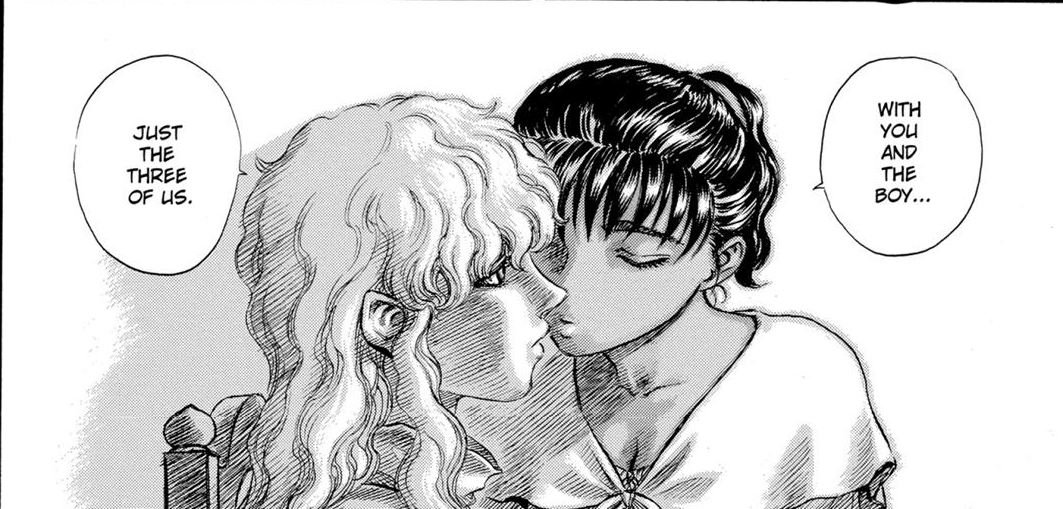


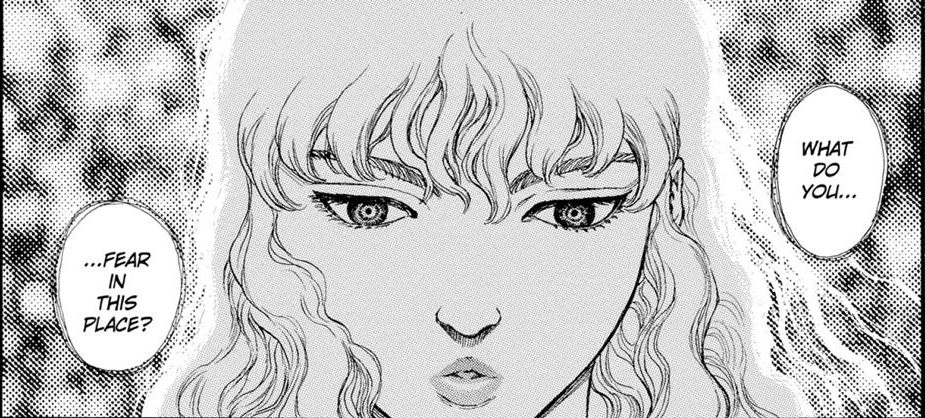
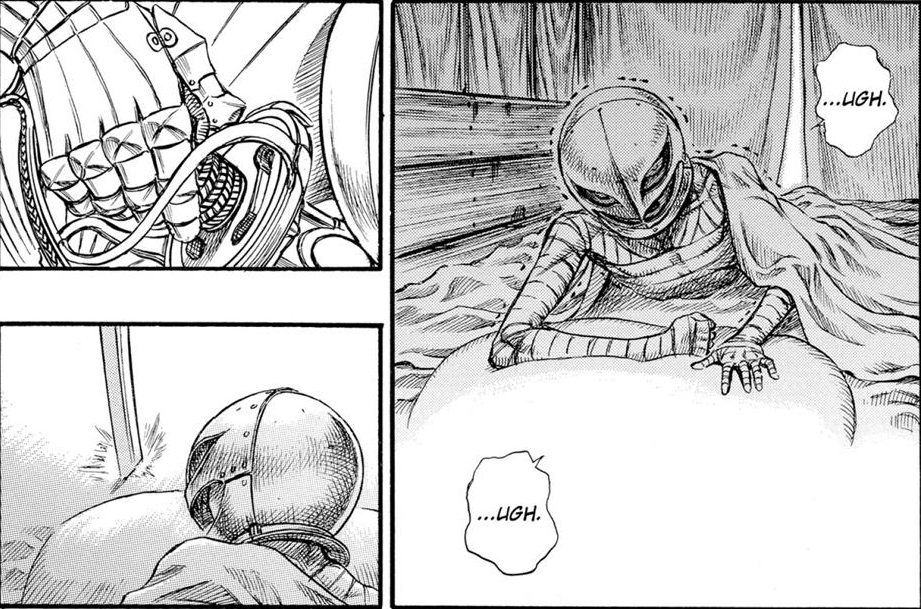
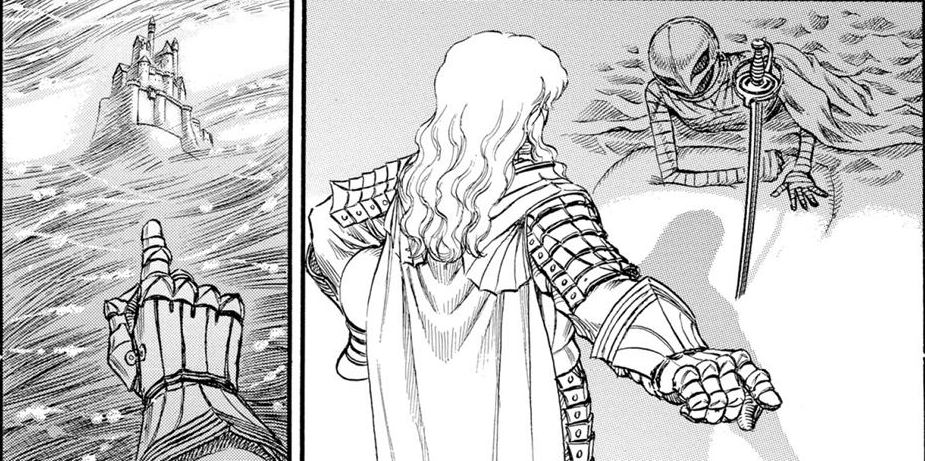
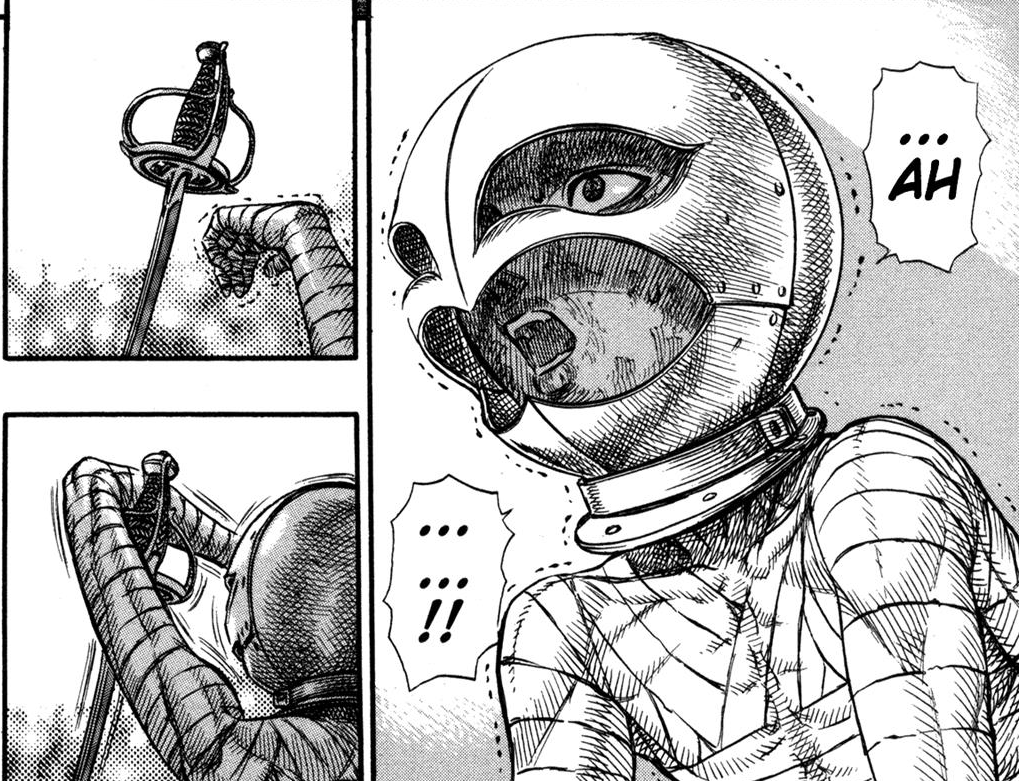


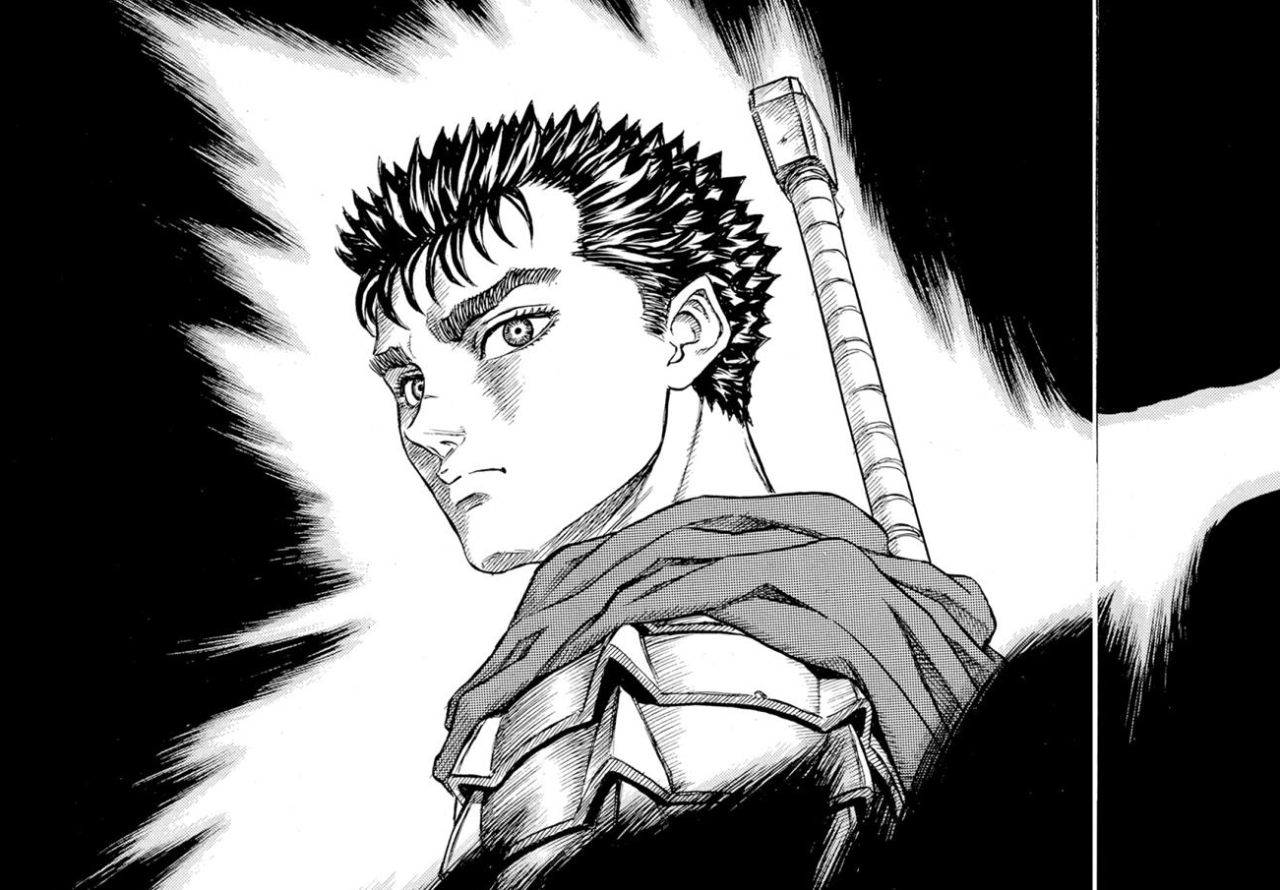
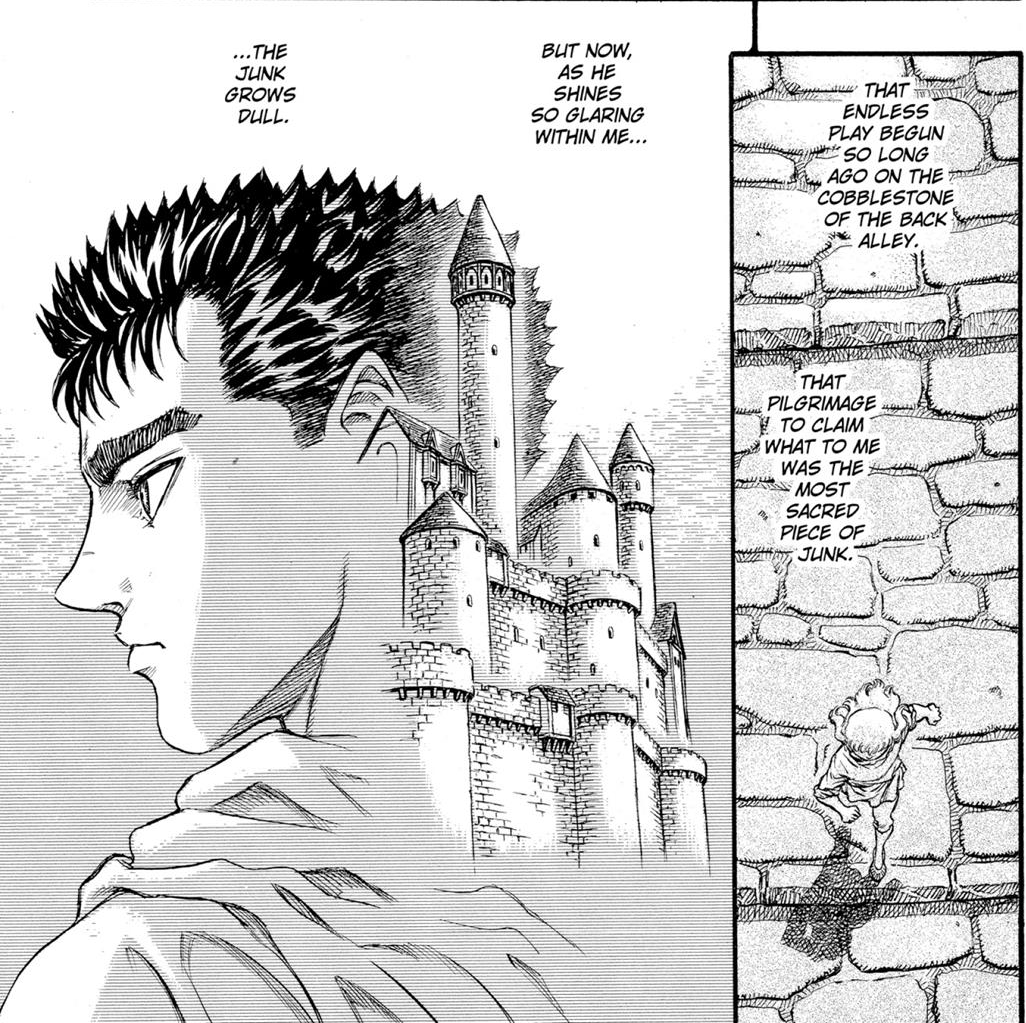


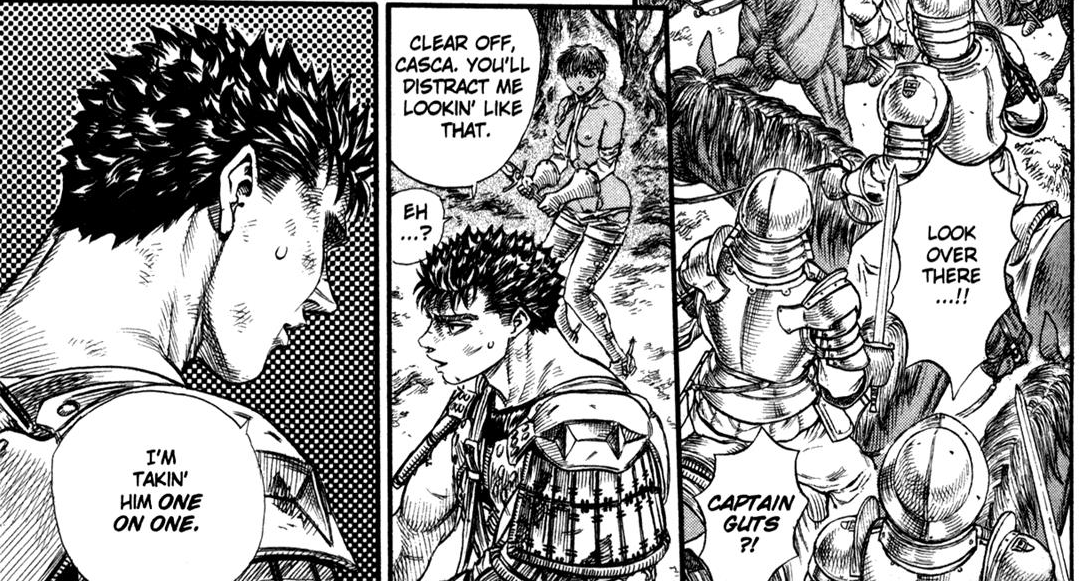
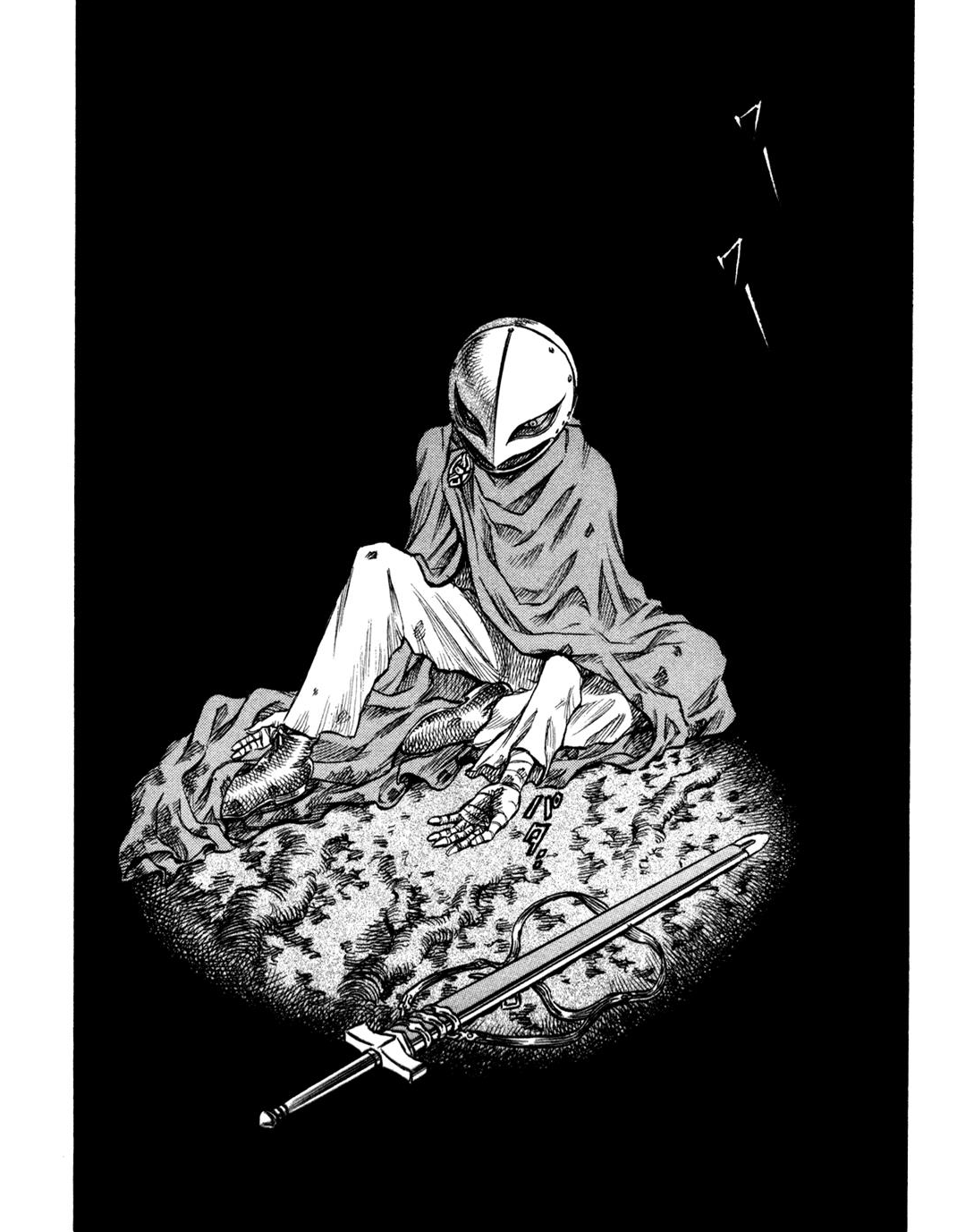


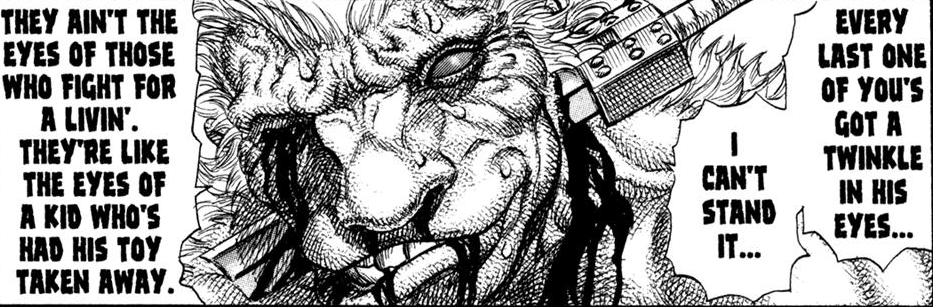


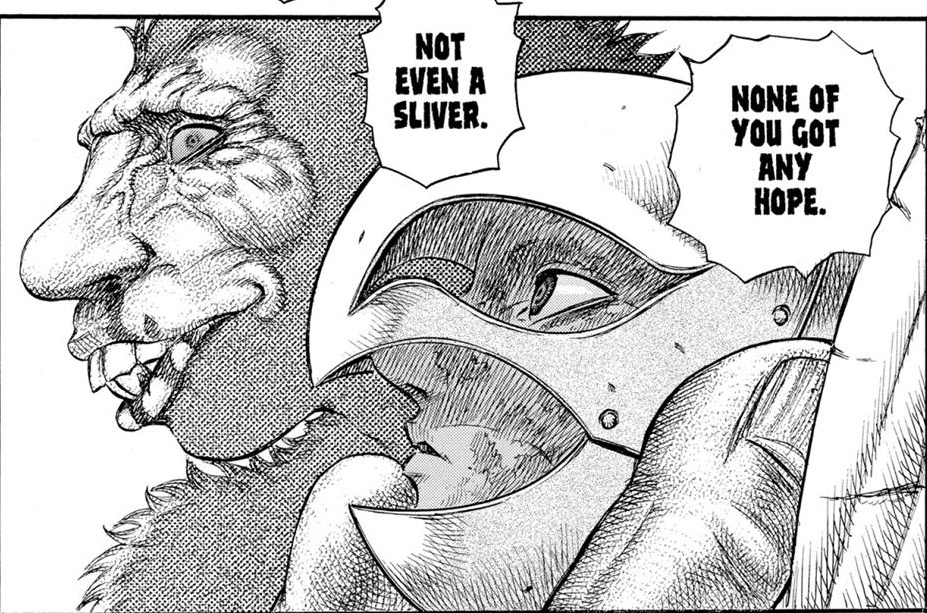


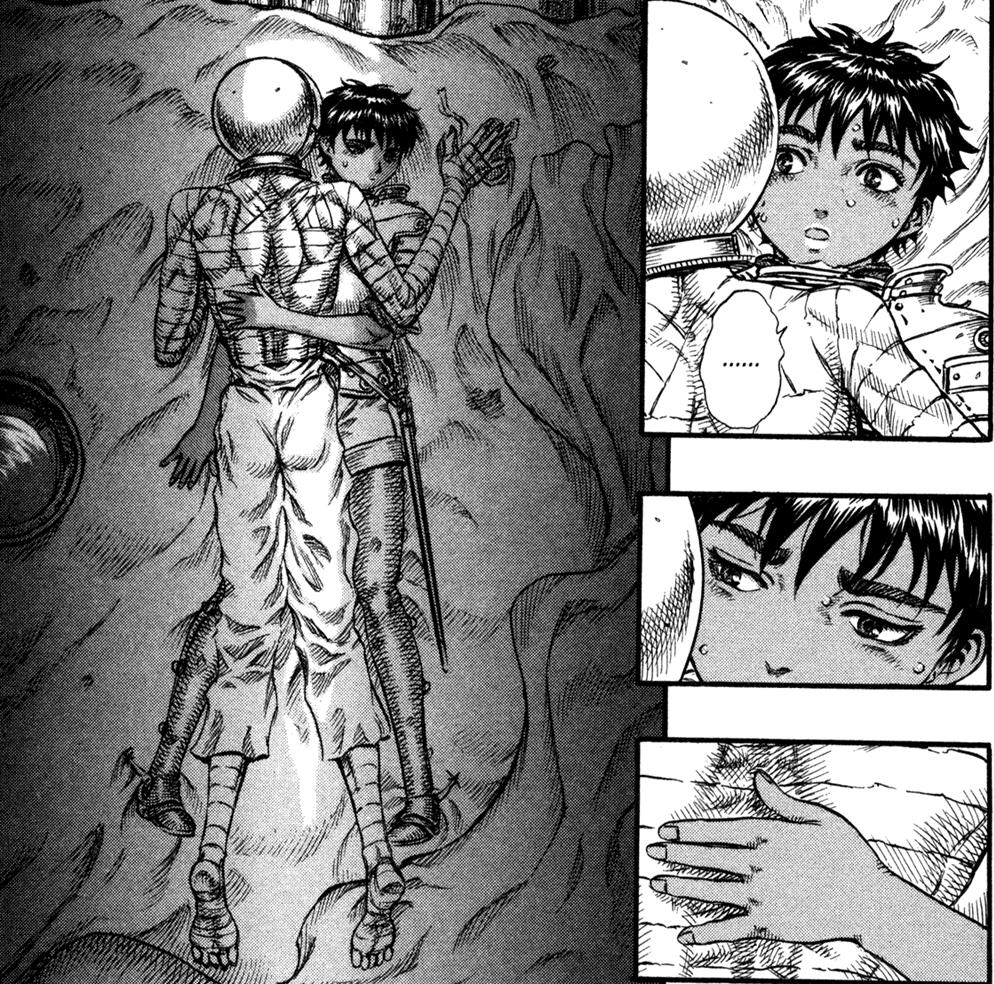
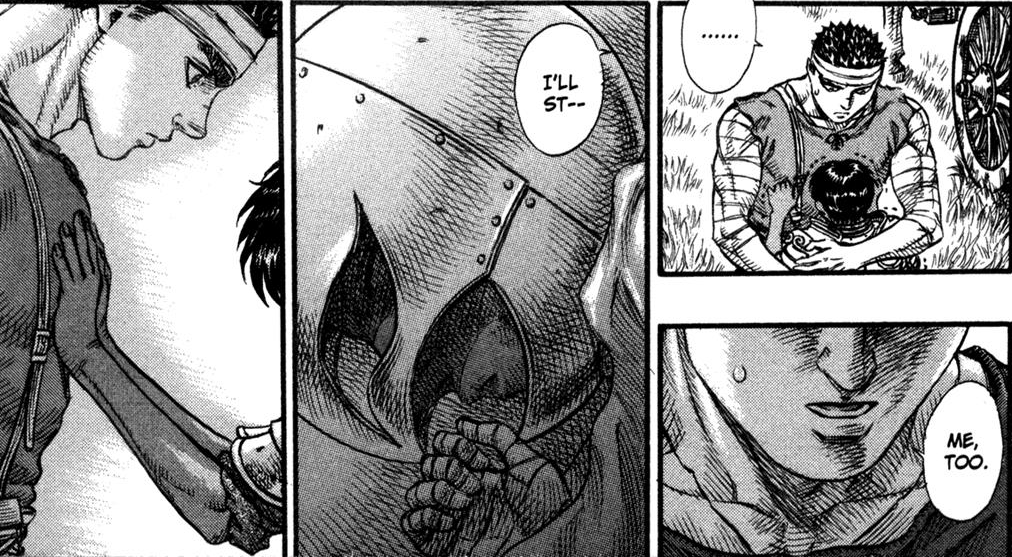


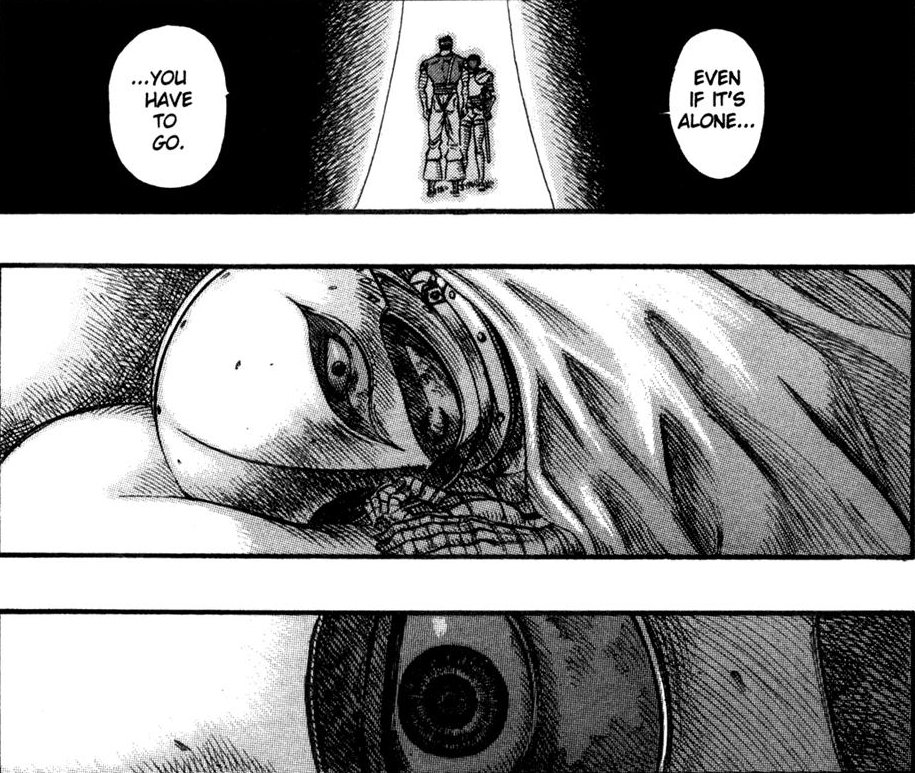


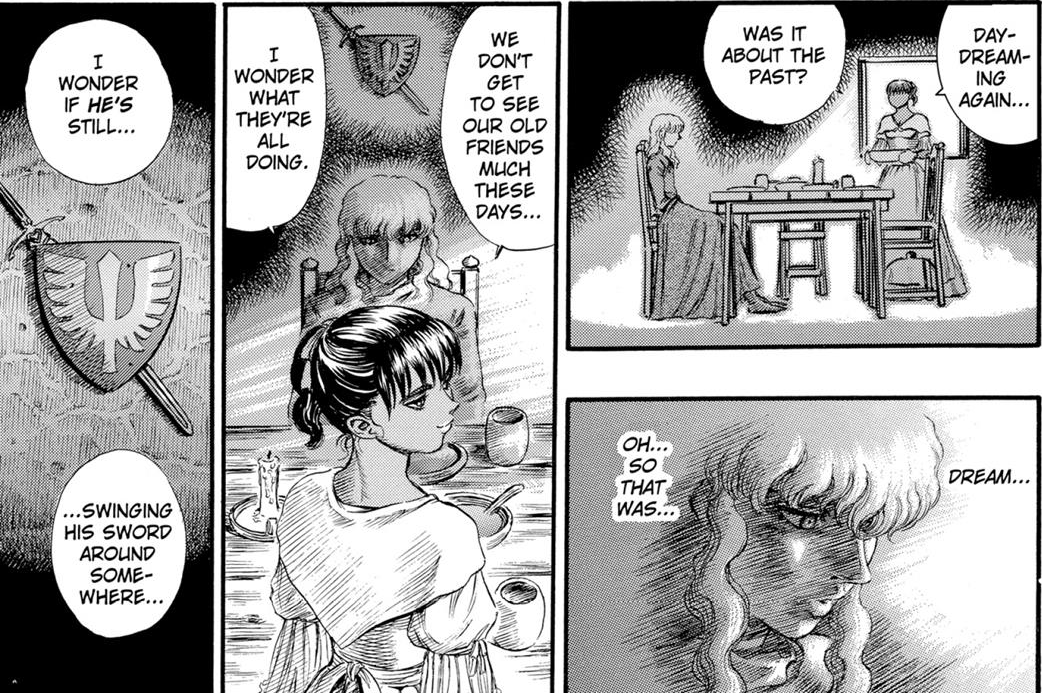


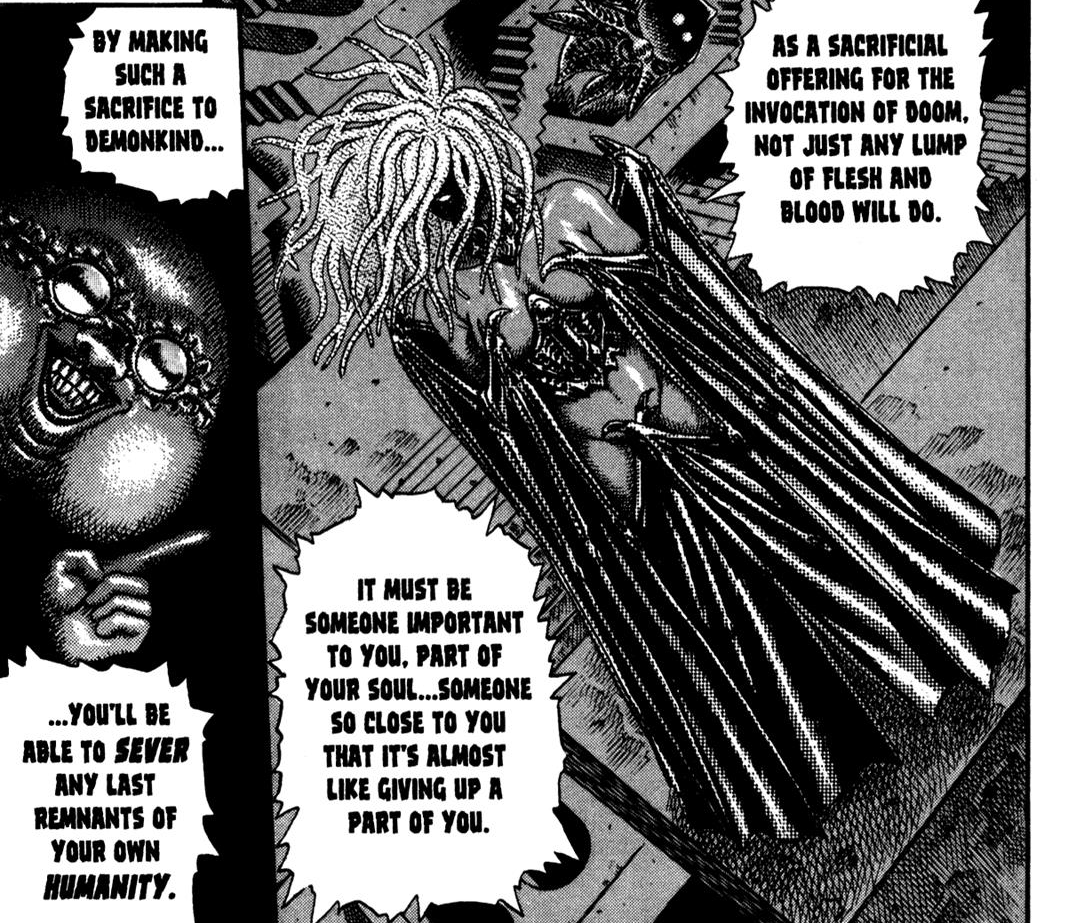
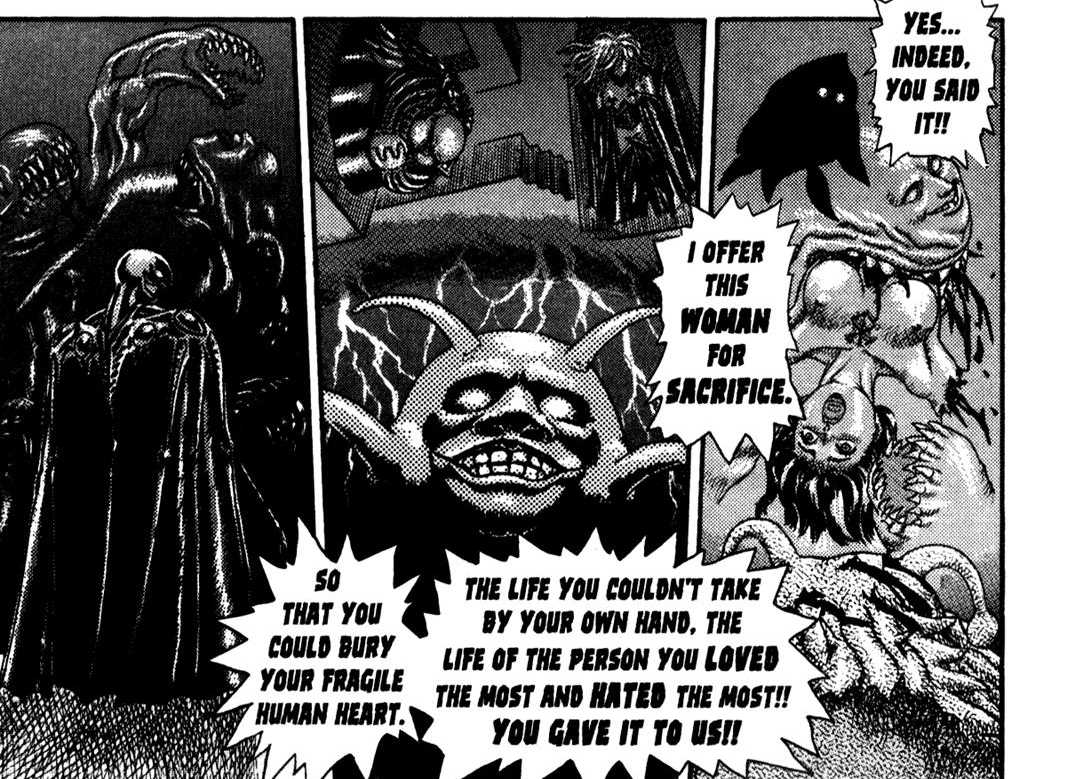


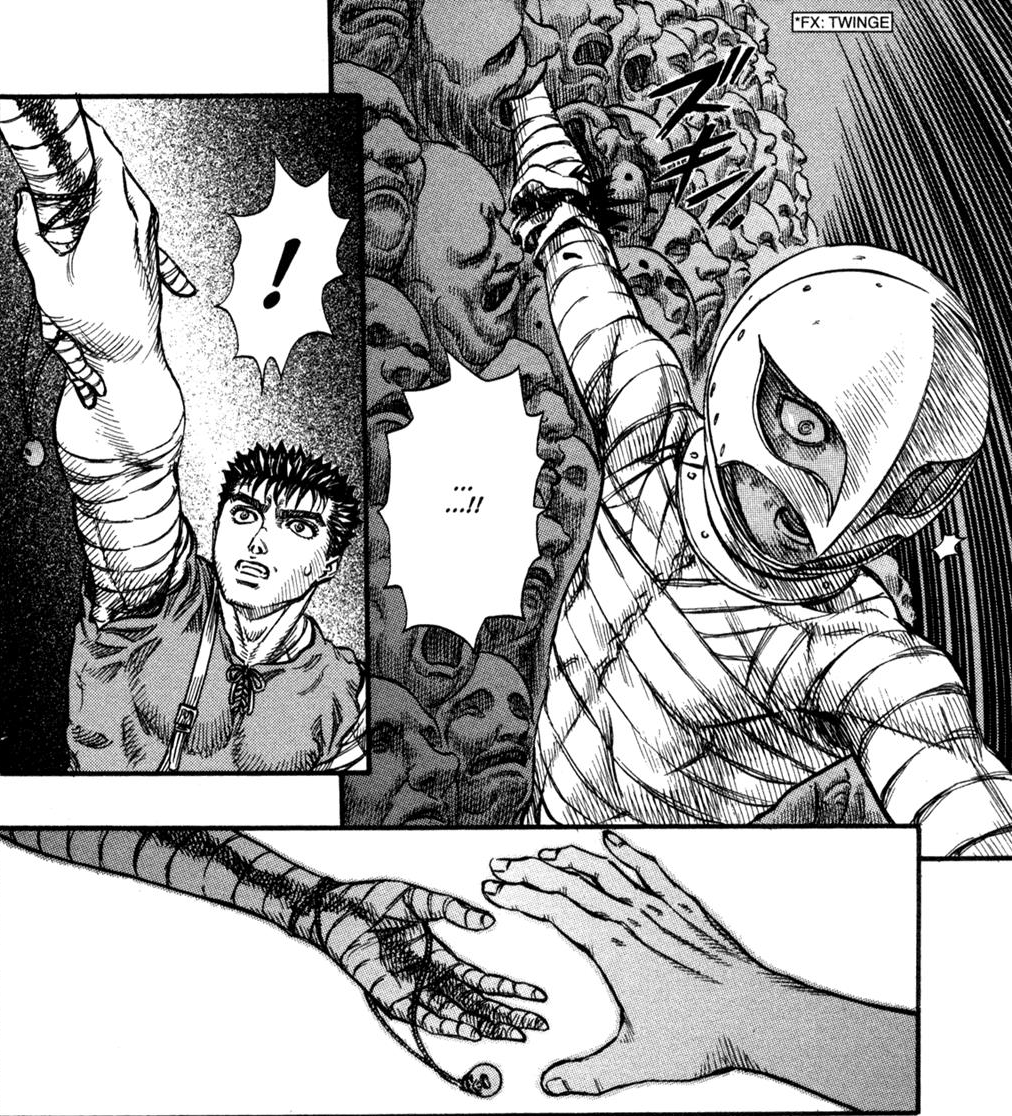
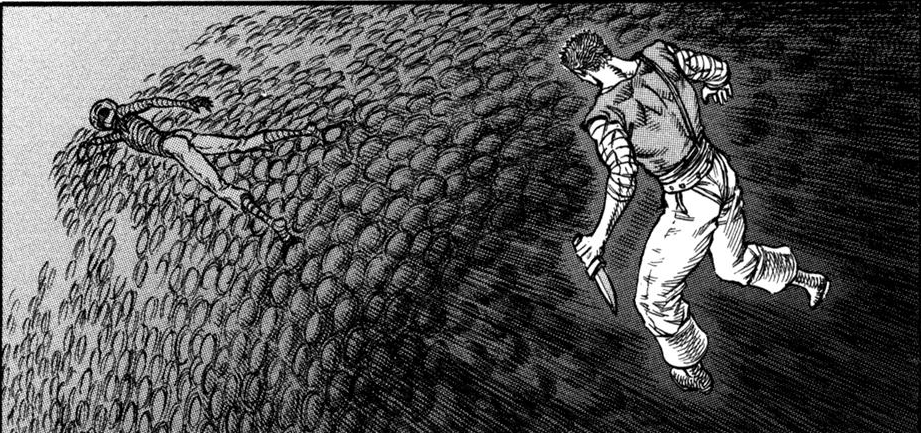


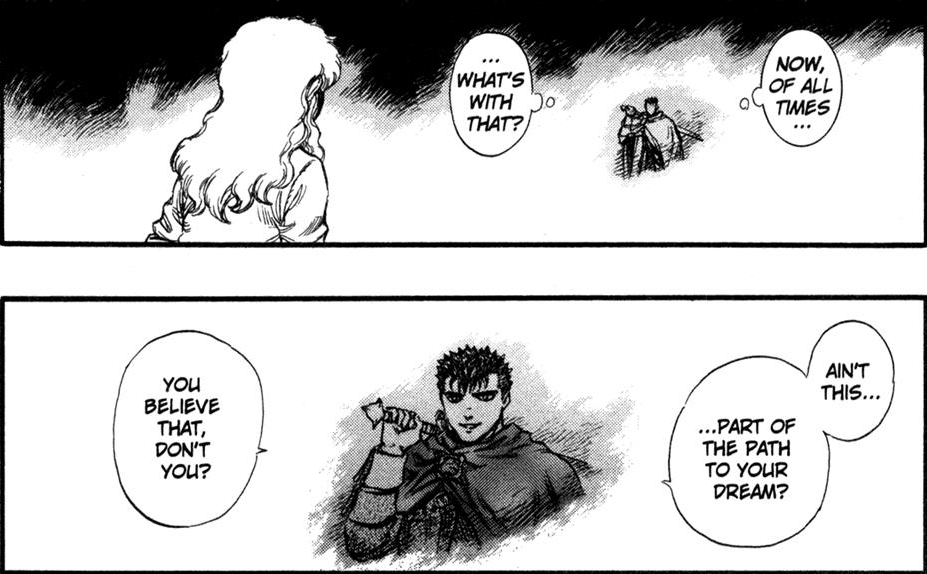


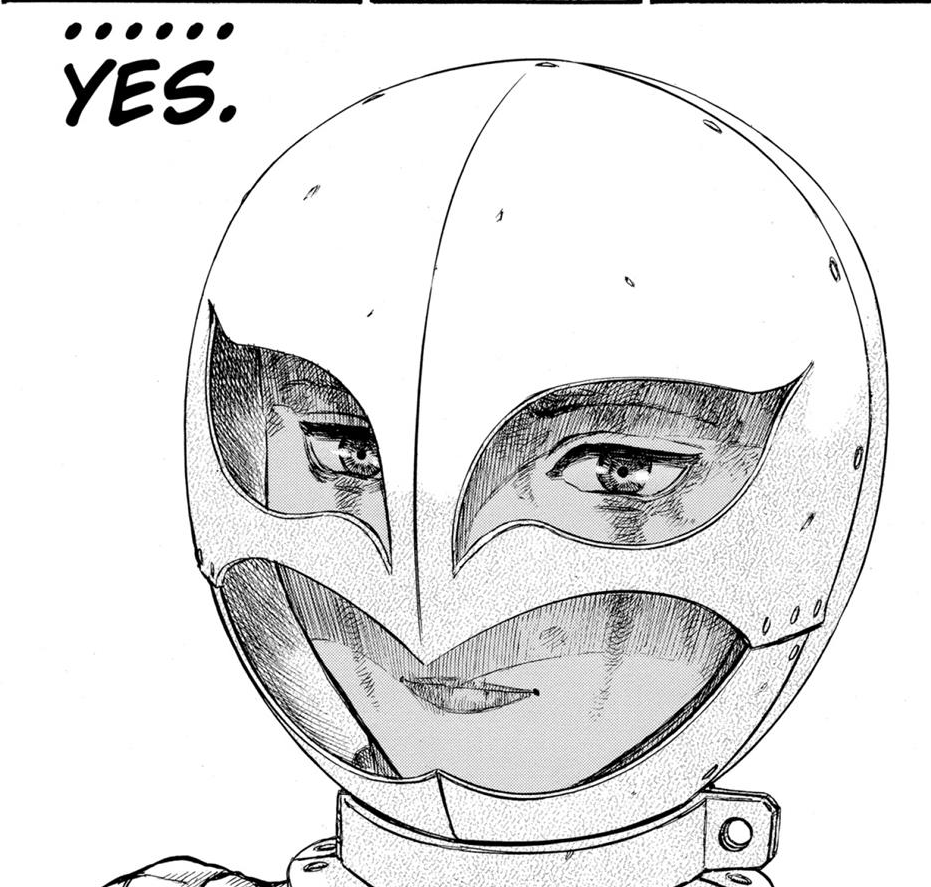


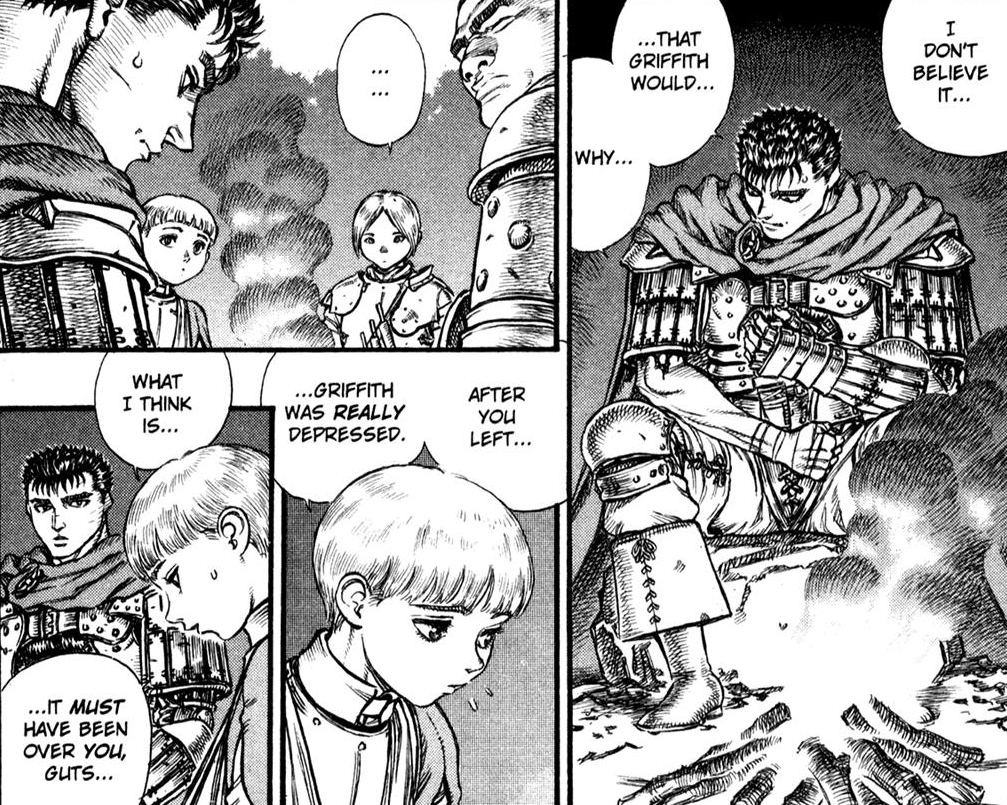


 you're the only one